Recommended Reading: Healthcare Matters from My Edmonds News

November 19, 2024

“Without transportation, local residents may skip health care”

On November 4, Hopelink’s Find a Ride Program Manager was featured in My Edmonds News. The article was the fourth of a fantastic five-part “Health Matters” series focused on health topics in South Snohomish County. It was sponsored by the Verdant Health Commission and examined roadblocks to health care.


Part 4’s subheading states that “Without transportation, local residents may skip health care”. The topic is near and dear to Hopelink’s Mobility Management team. We connect people daily to their communities by supporting increased mobility in King County and beyond. We encourage you to learn more about the King County Mobility Coalition, including the Access to Health & Wellbeing subcommittee. Please join our Regional Coalitions and look for our Mobility Education & Outreach team members in the community.


Two of our coalition-based programs encompass a three-county area. The Regional Alliance for Resilient and Equitable Transportation (RARET) workgroup is composed of emergency managers, transportation providers, human service agencies, and community advocates representing King, Pierce, and Snohomish Counties. Find a Ride is a multi-phase, multi-year program to implement a One-Call/One-Click system for Central Puget Sound. Learn more about Hopelink’s Mobility Management Team and connect with us today!


Below is an extended excerpt from the recent article from My Edmonds. We recommend you check out the whole series.

A new online tool from Hopelink, a King County-based nonprofit, aims to provide some clarity. The site –FindARide.org— creates a central place where people can filter their local transit options in King, Pierce and Snohomish Counties.


“Often people contact us in a bit of a crisis mode after they’ve exhausted their own network,” said Laura Loe, the Find a Ride program manager. “It would be so great if people knew about all of this before there was a crisis.”


While the site won’t officially launch in Snohomish County until next year, the tool already lists dozens of options for residents who need transportation assistance. People can adjust the results based on characteristics that might influence their options, like whether they have a disability, use Medicaid insurance or are a veteran. Knowing different options will help people find something that’s best suited to their needs. For example, even if someone qualifies for a public transit shuttle, they might not be comfortable sharing spaces with others or have the time to wait while the driver picks up other passengers.


Every time Loe gives a demonstration of the Find a Ride tool in the broader community, people notice resources that are new to them. For example, in a recent Seattle meeting, community members were enthusiastic to learn about the Downtown Circulator, a free, fixed-route shuttle bus that connects riders to health providers in downtown Seattle. Hopelink plans to share the tool with leaders in diverse communities, from city librarians to tribal transportation leaders. As they continue to develop the resource, they’ll focus on equity barriers, such as exploring how people without Internet or with low vision can best access the tool. Ultimately, Loe hopes the resource will reduce the number of people who forego healthcare because of transportation barriers.


“We talk a lot about the trips not taken,” Loe said. “We know there are a lot of trips for health care that people have given up because the system is so difficult to navigate. We want to get to the point where people don’t have to be transportation experts themselves just to know how to get around.”

Even so, she acknowledged the tool won’t share services that don’t exist, and gaps persist especially for last-minute needs. What happens, for example, if wildfire smoke suddenly triggers someone’s asthma and they must quickly get an inhaler prescription filled?

The My Edmonds News article is from part four of a five-part “Health Matters” series focused on health topics in South Snohomish County and sponsored by the Verdant Health Commission.

  • Part 1  “As county’s demographics change, immigrants struggle to access health care”
  • Part 2  “Area’s increasing density prompts gardeners to get creative growing in small spaces”
  • Part 3 “Despite clear value, many people delay or skip health screenings”
  • Part 4  “Without transportation, local residents may skip health care”


Learn more about Find a Ride on our Project Website.

Mobility News
By Lyn McCarthy June 8, 2026
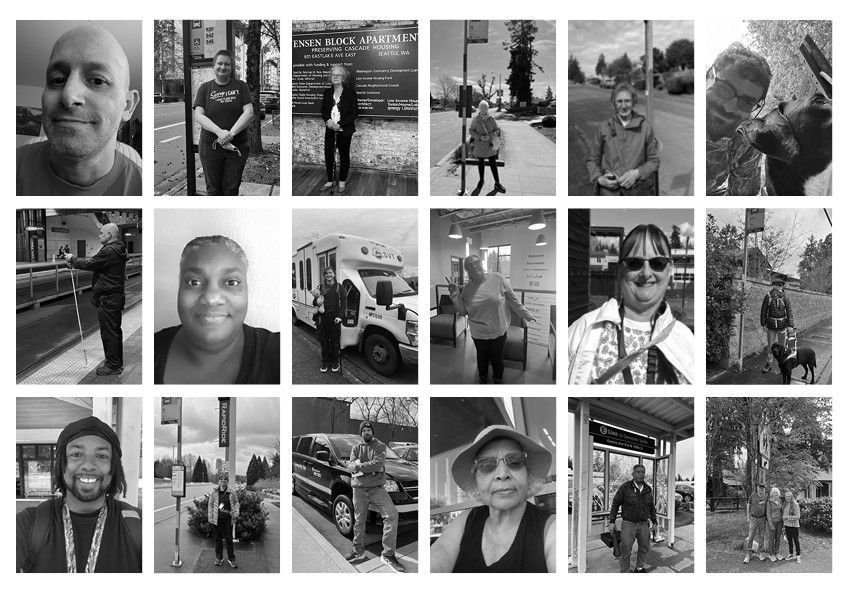
Stories Shape Systems
By Grace Georgitsis May 21, 2026
What is Find a Ride Phase 2? Hopelink Mobility is currently developing the Phase 2 of our One-Call/One-Click program, Find a Ride . Find a Ride already serves as a comprehensive database of transit and specialized transportation services across King, Pierce, and Snohomish counties, along with a trip planner that incorporates those services. In Phase 2, we plan to expand this program by creating a way for Find a Ride users to check their eligibility for several of these services at once. To learn more about Find a Ride Phase 2, read the Find a Ride Phase 2 Readiness blog post or this document explaining the project! Hack for Social Impact Hack for Social Impact is, in their own words, “A 501(c)(3) tech non-profit organization dedicated to solving real-world challenges by connecting engineers and data scientists with non-profits, NGOs, and civic organizations.” Their flagship event is an annual hackathon where nonprofits bring live technology problems for participants to tackle. In April 2026, Hack for Social Impact hosted a hackathon in Seattle in partnership with the Women in Tech Regatta . Hopelink brought Find a Ride Phase 2 as a challenge for the participants, asking them to find a way to streamline eligibility determination processes and applications for transportation services in the Puget Sound Region. More details on this challenge, and our vision for Phase 2, can be find in the Find a Ride “Hack-Pack.” Outputs: Two teams took on the Find a Ride Phase 2 challenge and dedicated several hours to reimagining how people across the Puget Sound region enroll in specialized transportation services. Each took their own unique approach to developing a framework for Phase 2. Hopelink Team - This team focused on the rider experience from intake to approval. Their solution centers on a single application that instantly shows users which services they qualify for, complete with match scores and plain-language explanations for any services they don't qualify for. Key features include: Instant eligibility checking with a match score for each available service One centralized application submitted to individual services for review Upfront document requirements so riders know what they need before they apply Admin dashboard for Hopelink staff to manage vendors, track applications, and access data insights — such as why users declined certain services Client-side application tracker for services with longer approval timelines RideReady Team – This team took a bigger-picture approach, tackling the fragmentation across the nonprofit rideshare landscape. Rather than improving one intake flow, they proposed a statewide verification platform — verify your eligibility once with Hopelink, then use that credential to access dozens of partner organizations, much like logging into a website with your Google account. Key features include: "Verify once, use everywhere" — a single sign-on model compatible with partner rideshare organizations across Washington state Multi-language support — 6 languages available on the web interface, and 57 via a built-in voice chat assistant Voice chat assistant designed for accessibility, particularly for elderly riders and non-English speakers Results: The RideReady team won the Hackathon with their vision of Find a Ride Phase 2! Click here to see the site that they created. This site is a prototype and is meant to serve as proof of concept. The Find a Ride team will be taking insights into consideration from both projects as we develop Phase 2 but will ultimately continue to prioritize input from our partners. What made this hackathon so valuable wasn't just the quality of individual solutions — it was seeing two different teams independently confirm that the same core problems need solving: too much repeated data entry, unclear eligibility, and barriers that make accessing transportation harder than it needs to be. The ideas these teams prototyped, along with feedback from our dedicated partners, will inform how we shape Find a Ride Phase 2. We're grateful to Hack for Social Impact, the Women in Tech Regatta, and every participant who brought their expertise to this challenge. Stay tuned for more updates as Phase 2 continues to take shape!  To learn more about Find a Ride Phase 2, read the Find a Ride Phase 2 Readiness blog post on the KCMobility website or join us at a Find a Ride Advisory meeting! For an invite, reach out to Grace Georgitsis at ggeorgitsis@hopelink.org, or by phone at 425-625-6836.
By Lyn McCarthy May 9, 2026
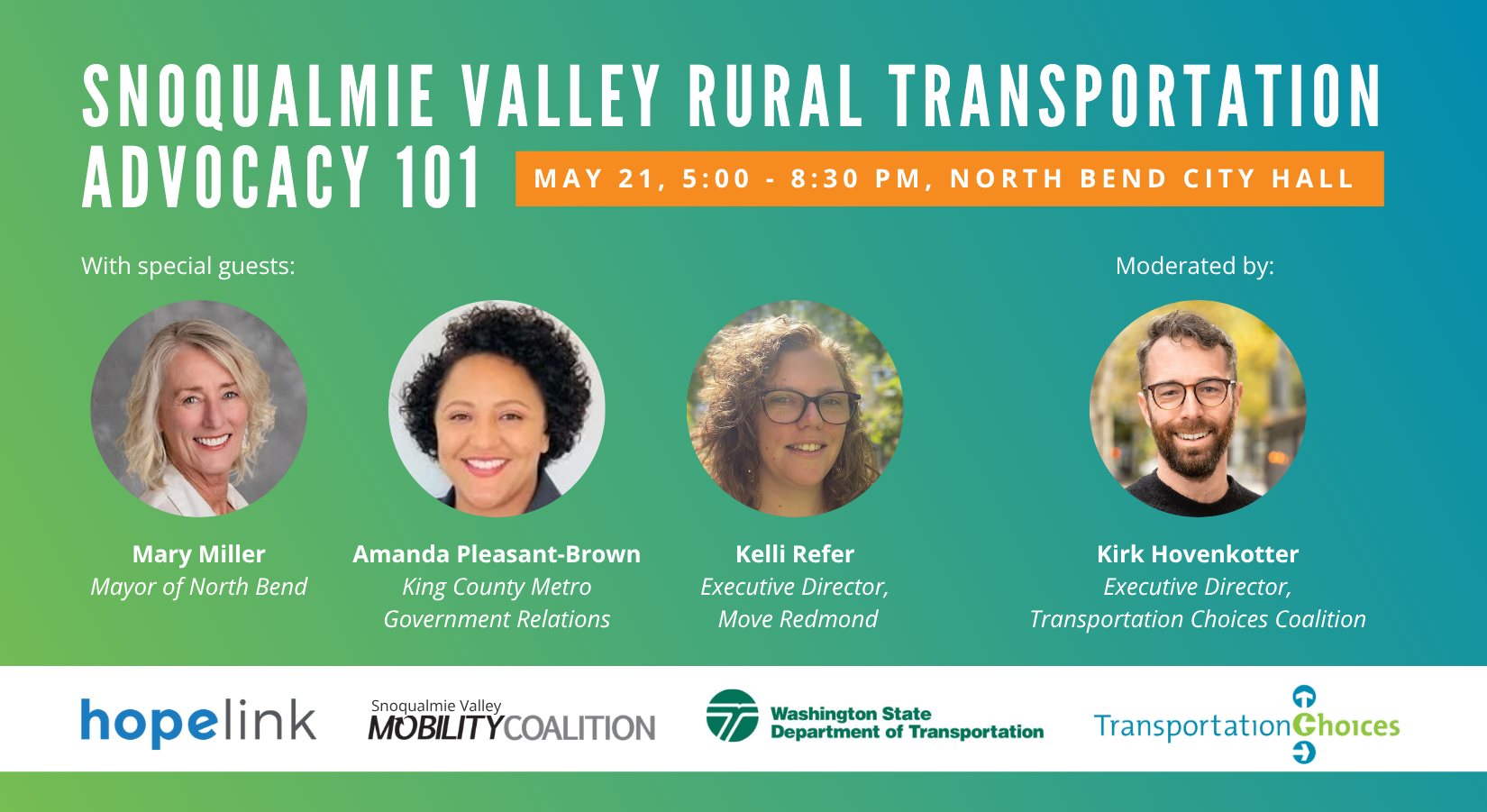
Thursday, May 21st 5:00-8:00pm, North Bend City Hall
Screenshot of Spinner and Transportation Options Page
By Laura Loe March 25, 2026
With the support of two vendors, Anthro-Tech and Cambridge Systematics, and incorporating feedback from our Mobility Team, various Mobility Coalition Partners and individuals with disabilities, we are excited to bring you an updated version of Find a Ride.
By Lyn McCarthy February 10, 2026
Your Story Matters
RARET Logo, RARET stands for Regional Alliance for Resilient and Equitable Transportation
By Dean Sydnor February 6, 2026
Read the full 10-page report here: RARET Flooding 2025 Transportation Report
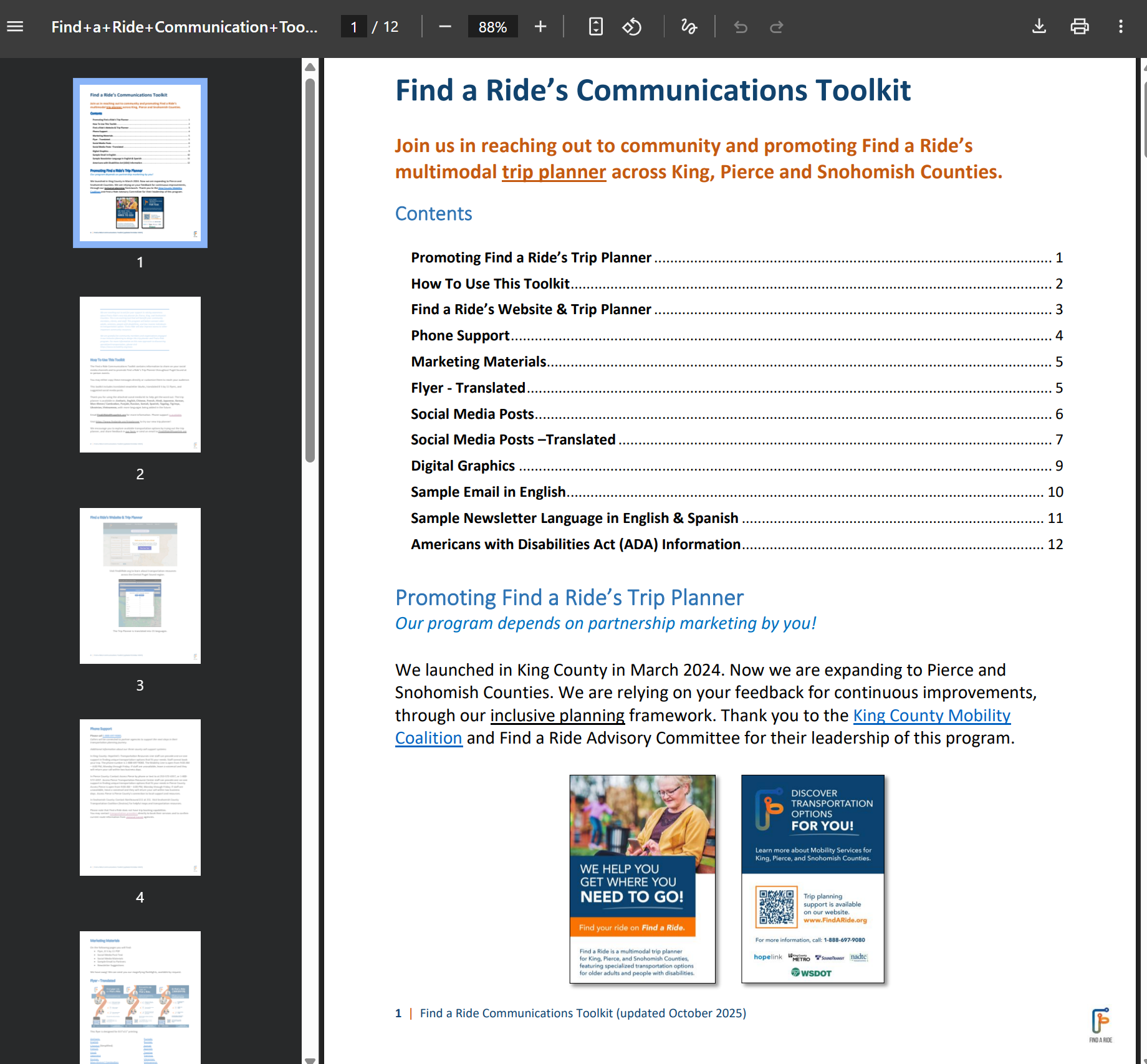
PDF of Find a Ride toolkit
By Laura Loe October 17, 2025
The Find a Ride Communications Toolkit contains information to share on your social media channels and to promote Find a Ride’s Trip Planner throughout Puget Sound at in-person events.
Logo Find a Ride Phase 2
By Laura Loe August 7, 2025
Phase 2 seeks to streamline rules and procedures for rider intake, eligibility determination, and enrollment verification in Puget Sound
By Lyn McCarthy July 28, 2025
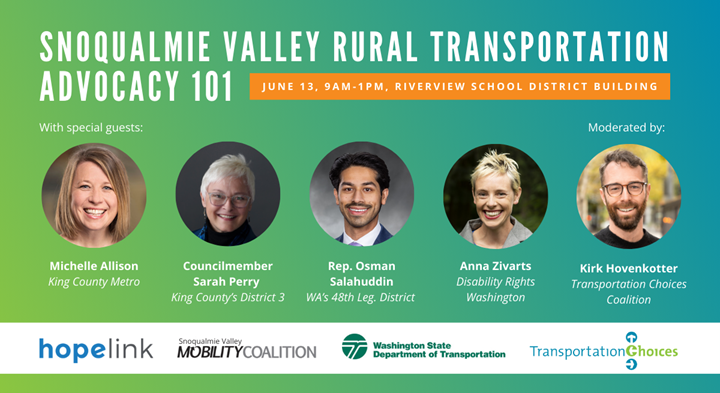
SVMC hosted a Rural Transporation Advocacy 101 Workshop on June 13th, 2025
RARET logo
By Dean Sydnor July 17, 2025
Downstream Transportation Impacts of Medicaid Cuts & Changes, July 2025
More Posts