
South King County Mobility Coalition 

About SKCMC

The South King County Mobility Coalition’s ongoing efforts support residents reaching their potential by increasing their transportation options. Through identifying coordinated and sustainable ways to assist individuals, with a focus on older adults, youth, persons with disabilities, immigrants and refugees, Veterans, and low-income individuals, we work to share current information on needs, trends, and events relevant to mobility within the region.

SKMC Goals


  1. Identifying and addressing gaps within the current transportation network
  2. Facilitating coordination between transportation and human services providers
  3. Educating the public and agency personnel about available transportation options


Projects and Resources  

Rural Transportation Advocacy Project (RTAP)


  • What is the Rural Transportation Advocacy Project?

    The Rural Transportation Advocacy Project is a KCMC project that is supported by SKCMC and SVMC. This project is funded by the National Rural Transit Assistance Program and seeks to provide resources to transportation advocates in rural areas of King County.


  • Project Goal

    Provide tools and resources to help those living in rural areas in King County effectively advocate for transportation resources in their community.

  • Deliverables

    • Rack Cards - Outreach material with QR codes to relevant sites and information for rural advocates.
    • Workshop Events - Opportunities for rural organizers, advocates, and community members to network and learn more about transportation advocacy. These events are free and open to the public.
    • Online Resource - The online resource will live on the KCMobility website and provide more in-depth information on transportation advocacy specific to rural areas.
  • Workgroup Meetings

     The SKCMC and SVMC Mobility Coordinators are hosting workgroup for interested partners to discuss and give feedback on the RTAP project. Workgroup meetings are held on the 3rd Friday of every other month from 10:30am to 12:00pm beginning in January of 2026. Workgroup dates are listed below:


    January 16th, 2026

    March 20th, 2026

    May 15th, 2026

    July 17th, 2026

    September 18th, 2026

    November 20th, 2026


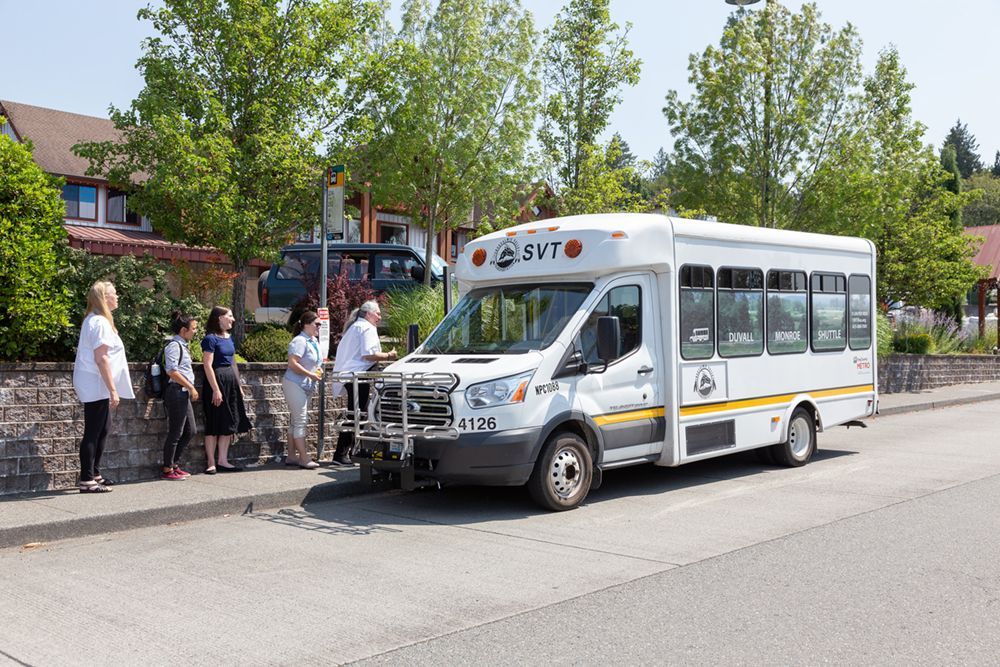
The Snoqualmie Valley Transit Duvall Monroe shuttle picks up passengers at the bus stop on a sunny day.

Learn about the Cross-county Transportation Project

  • Brief History of initial Cross-county Transportation Project

    The North King County Mobility Coalition (NKCMC) partnered with the University of Washington to conduct a study beginning in February 2023 entitled Cross-County Transportation Needs Between King and Snohomish Counties. This study aimed to examine barriers to cross-county transportation between King and Snohomish Counties, particularly for riders relying on paratransit and specialized transportation services. 


    The study identified key obstacles and potential solutions to improve seamless, equitable transportation access across county lines through literature reviews, interviews with transportation providers and end-users, and a SWOT analysis. The project uncovered key challenges such as inconsistent funding, long transfer times, confusing eligibility criteria for paratransit services, and poor coordination between different transit agencies.


     Armed with these insights, our team set a clear goal: to create easily accessible, user-friendly resource guides that empower riders—especially older adults, people with disabilities, and other vulnerable groups—to navigate cross-county travel more efficiently. 

  • Project Overview

    Building on North King County Mobility Coalition's Cross-county Transportation project findings, this initiative aimed to enhance the ease of crossing county and city lines in South King County. By addressing key recommendations from the original cross-county study, our project collaborated closely with the North King County Mobility Coalition to develop practical solutions that benefit transit riders and service providers.


    The primary goal of this project was to create two comprehensive sets of transportation resource guides, one tailored for North King County and another for South King County. Each subregion received two distinct guides: 


    1. Digital Resource Guide: Includes cross-county and local transportation options in South King County and parts of Pierce County. In-depth information is provided about each service.


    2. Physical Resource Guide: This resource guide includes only King County-based transportation options. All transportation options featured in the guide offer cross-county rides except for two services. It provides high-level information about each service. 


    The Cross-county Transportation resource guides were developed to bridge information gaps, improve coordination between transit services, and enhance mobility options for riders traveling between King and Pierce Counties. These resource guides aim to provide clear, up-to-date transportation options, especially for older adults, people with disabilities, and those relying on specialized services. They are distributed throughout the community and shared with strategic partners, ensuring widespread accessibility and impacts. 


    The Cross-County Transportation project was a collaborative effort made possible by the South King County Mobility Coalition and its partners. Through bimonthly meetings and individual discussions, coalition members provided invaluable feedback to shape the project. We also worked closely with transportation service providers to verify and approve the information included in the resource guides, ensuring accuracy. A special thank you to our Find a Ride team for their crucial role in confirming service details and helping to shape the project’s scope. By uniting transit providers, community organizations, and technology partners, the coalition is empowering riders with reliable, user-friendly transportation information—making cross-county travel smoother and more accessible.

  • Project Timeline: Resource Guide Development

    1.  Partner Engagement and Content Development

    • Identify key collaborators and service providers to include in the resource guides.
    • Refine content list based on partner mapping.

    2.  Feedback Collection and Integration

    • Gather feedback from coalition partners on content and structure. 
    • Review and integrate suggestions for relevance and completeness. 

    3.  Service Information Verification

    • Confirm service provider details for accuracy. 
    • Resolve discrepancies and validate information. 

    4.  Resource Guide Drafting 

    • Develop the initial draft with verified information.
    • Organize content for clarity and user-friendliness.
    • Gather feedback and implement revisions. 

    5.  Design and Formatting 

    • Enhance layout for readability and accessibility.
    • Apply consistent branding and formatting.

    6.  Finalization and Distribution

    • Finalize resource guides and address remaining edits.
    • Distribute resource guides via the KCMobility and Find a Ride websites, outreach events, and printed copies. 
    • Promote through coalition newsletters and blog posts. 

  • Reflecting and Looking Ahead

    The Cross-county Transportation Project has contributed to enhancing riders’ access to reliable transportation information in King and Snohomish/Pierce Counties. The development of the digital and physical resource guides, in collaboration with the North and South King County Mobility Coalitions, service providers, and the Find a Ride team, represents a significant step toward solving long-standing information gaps. These resource guides provide riders—particularly older adults and people living with disabilities—with clear, up-to-date information about transportation options, eligibility requirements, and service availability.  


    While these guides provide valuable support for riders, they are not a complete solution to the persistent challenges of cross-county travel, such as transfer inefficiencies and limited coordination between transit agencies. However, they represent a critical tool in making travel more seamless and equitable. Looking ahead, maintaining, and updating the physical and digital guides will be essential for their continued usefulness. Additionally, fostering ongoing collaboration between partners will be key to developing more comprehensive solutions. By leveraging these guides and collective efforts, we can move closer to a more accessible and efficient regional transportation system. 


Resources:


The South King County Mobility Coalition also offers a variety of resources and reference guides to assist trip planning and traveling around South King County:


View more SKCMC Resources here!

Upcoming SKCMC Meetings    

View all area events >     Submit an event >

Meetings

Each year, starting in January, the SKCMC Coalition meets every other month, on the second Thursday, from 10:30 AM to 12:00 PM. Additional events or meetings are scheduled as needed. 


View all past meeting materials, notes, and slides.

Join Today

SKCMC is always looking for new partners who share our passion for improving mobility and access to transportation. To learn more about the Coalition or attend a meeting, call us at (425) 516-5418, email KKane@Hopelink.org , or click here to join the SKCMC Mailing list.