RARET Flooding 2025 Transportation Report
Read the full 10-page report here: RARET Flooding 2025 Transportation Report

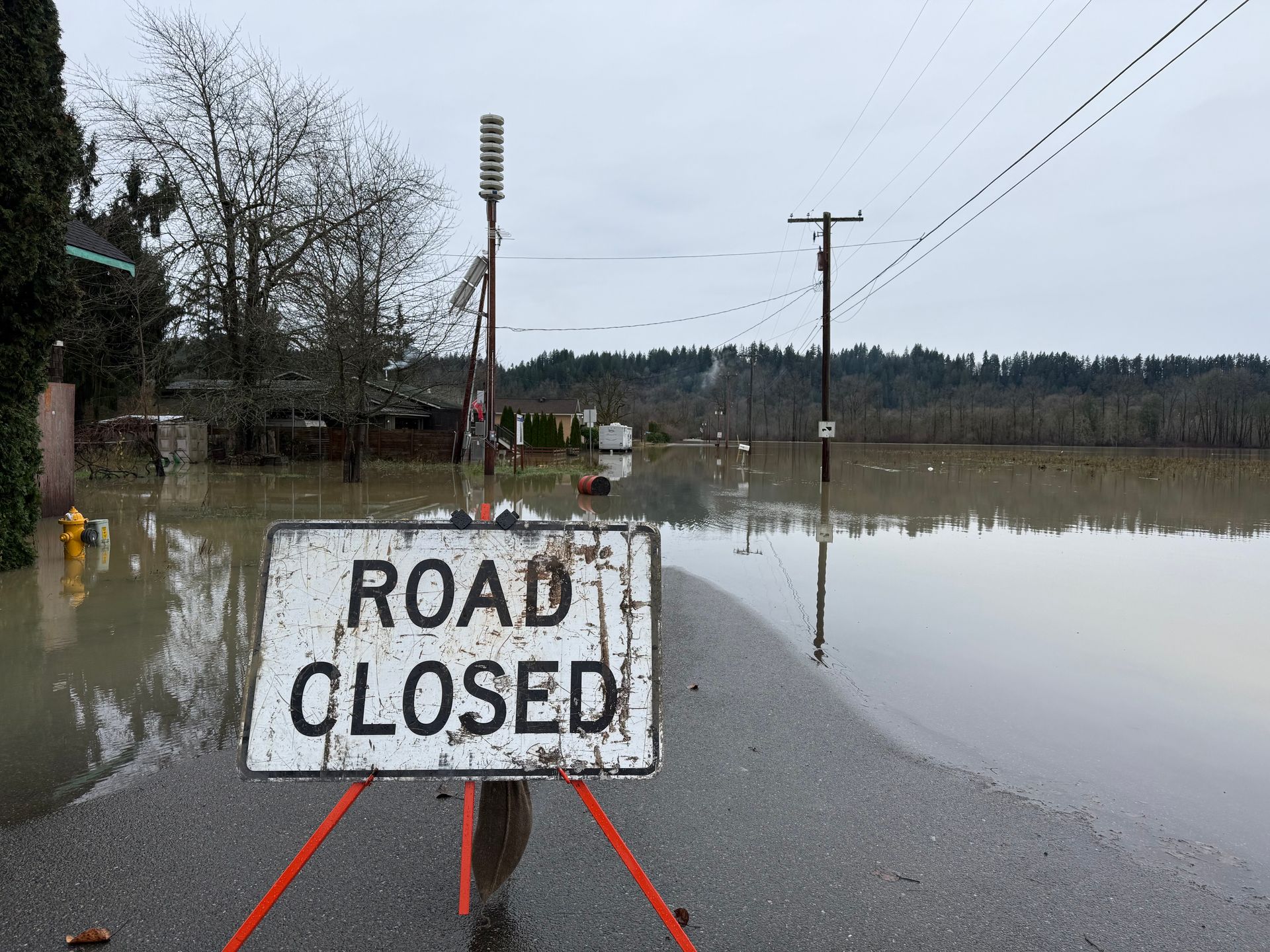
December 2025 saw atmospheric river conditions
bringing trillions of gallons of rainwater to the Pacific Northwest, triggering a hydrologic outlook, meaning there were upcoming conditions that could support flooding in western Washington. This evolved into flood warnings for much of the region as the
NWS River Gauge tool predicted major flood threats
as some reached historic levels. Natural events like these present distinct transportation challenges. For a geography like western Washington,
variable elevation and an abundance of rivers running from the mountains to the Puget Sound mean that several communities and transportation corridors exist in flood plains. Infrastructure failure
from levee breaches can further exacerbate flooding and expand the geographic extent of impacts.
From a transportation perspective, the primary impacts stem from unusable infrastructure during major flood conditions, resulting in the geographic isolation of certain communities that effectively become population islands, as seen in past events such as flooding in 2009. As a result, the movement of people and essential goods is disrupted, requiring significant rerouting or suspension of travel until floodwaters recede. Individuals affected by flooding may experience prolonged delays or become completely cut off, forcing the postponement of even essential trips. In some cases, flooding directly impacts residences, displacing individuals from their homes and damaging or destroying personal property, including vehicles. Displacement, isolation, and the loss or damage of vehicles are all factors which can exacerbate challenges for non-drivers or even create new non-drivers.
RARET, a
Mobility Management coalition serving Snohomish, King, and Pierce Counties, engaged transportation providers and mobility managers following the late-2025 major flooding in western Washington to identify lessons learned and best practices related to life-sustaining transportation during emergency events.
Key findings include:
- Strengthening transportation provider flood preparedness and partnerships
- Establishing internal task forces within smaller transportation providers to support flood response
- Improving coordination between Non-Emergency Medical Transportation (NEMT) brokers and county-level emergency management
- Increasing access to transportation resources during recovery
- Leveraging Mobility Management education and outreach capabilities
- Ensuring printed transportation materials are available in multiple languages and that digital resources are accessible
Transportation providers, particularly those with smaller staff and more limited resources, may be less prepared for flood impacts. Providers with established flood response processes, often informed by prior experience, offer valuable models for best practices. The flooding event also highlighted the critical role NEMT can play during emergencies. Strengthening bi-directional relationships between NEMT brokers and emergency management agencies is mutually beneficial. Additionally, greater integration of Mobility Management into preparedness and recovery efforts can help ensure transportation needs are addressed through direct support from mobility professionals where possible.
For RARET, key internal lessons learned include:
- The need to improve education for emergency managers on the use and implementation of the Emergency Transportation Provider Network (ETPN) Portal, particularly for situations when RARET staff cannot be reached
- Increasing RARET’s understanding of statewide mobility managers’ capabilities and readiness to support emergency response efforts
- Coordinating with the regional one-call, one-click project to clarify procedures for accommodating individuals who wish to use text messaging, while that functionality remains under development
Recommendation Cheat Sheet
Preparation
- Transportation providers should identify flood-prone areas within their service regions and develop flood action plans where risks exist.
- Emergency management agencies should strengthen relationships with Non-Emergency Medical Transportation (NEMT) brokers to improve regional resilience.
- Transportation providers should maintain current, printable transportation resources that can be distributed as physical materials during disasters, in multiple languages.
Response
- Transportation providers should understand which tools are available to assess flood risk, how to access them, and how to use them effectively. Response plans should clearly define risk thresholds that trigger specific actions.
- Transportation providers should identify key personnel responsible for monitoring developing flood conditions and supporting timely, informed operational decision-making.
Recovery
- Mobility Management can serve as transportation subject matter experts when establishing recovery resource hubs.
- Clearly identifying priority languages in impacted zones for transportation materials enables mobility managers and transportation providers to collaborate on producing and distributing accessible resources.
- Following an event, the one-call, one-click tool Find a Ride can be useful to non-drivers displaced from their homes by helping them understand transportation options available to them in their temporary or permanent housing locations.
For a complete look at RARET’s report, and to view the anecdotes from local partners which informed these findings, see the link here. To contact RARET, reach out to DSydnor@hopelink.org via email.
Mobility News