Community Transportation Navigators  

The logo for king county metro is black and white.
A blue and white logo for community transportation navigators. Engage, Educate, Enroll, Empower
The logo for hopelink mobility is blue and black on a white background.

Community Transportation Navigators Program Overview 
The Community Transportation Navigators (CTN) program uses a peer-to-peer approach to provide trusted transportation information and outreach education to hard-to-reach communities. This model empowers and encourages community champions to use their networks and ensure their local communities receive culturally inclusive information and resources.   

History of CTN

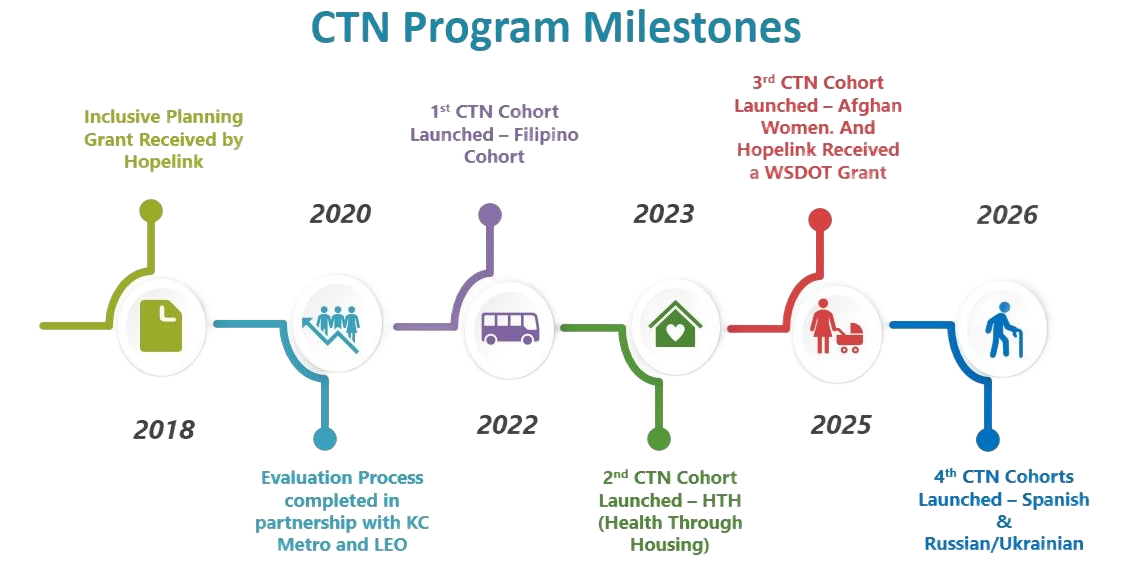
In 2018, the King County Mobility Coalition (KCMC) was awarded an inclusive planning grant to develop an inclusive process to evaluate how people find and secure free or low-cost transportation in our region. This grant opportunity focused on older adults, people with disabilities, non-English speakers, low-income individuals, people experiencing homelessness, immigrants, refugees, veterans, and youth.


After collecting feedback, the Inclusive Planning Steering Committee, which consisted of transit agencies, community members, and human service representatives, voted to move forward with several projects, including Community Transportation Navigators. Community members with lived experience can best help their peers or groups of people with unique needs, like refugees, immigrants, people with disabilities, or people facing housing challenges. Chosen Transportation Navigators will have the experience and skills to provide unique support to meet the needs of the communities and clients they represent. 


In 2020, KCMC, King County Metro, and Notre Dame Lab for Economic Opportunity began researching how to pilot the CTN program. This research led to a working partnership with the local Somali and Afghan communities and the creation of a full CTN program.


During the summer of 2022, Hopelink and King County Metro launched the first CTN program, connecting community members with trusted peer guides who, through shared experiences, languages, cultures, and geography, provide transportation options and connections to greater opportunities.


Health Through Housing (HTH) Cohort

Health Through Housing Cohort 1.0

Our team is proud to announce the first CTN cohort dedicated to serving the Health Through Housing (HTH) residents to increase their access to transportation. Health Through Housing is an innovative program designed to support the region’s homeless population by repurposing hotels and other vacant buildings in King County. King County is partnering with host cities to create up to 1,600 units of emergency housing and permanent supportive housing for people experiencing or at risk of long-term homelessness.


HTH Navigators come to our team with their unique experiences with homelessness, ready to empower their peers and improve their quality of life with transportation. Navigators are trusted resources and provide ongoing transit education and outreach onsite at the HTH facilities. They share transportation resources, assist with trip planning, and build relationships with residents. 

Three men are posing for a picture together in a room.

Lester (pictured on the left)

Lester was born in Vancouver, BC, Canada, and lived in Washington and Germany for years. He is now a proud Filipino who lives in Federal Way with his Maltese and Shi Tzu mix dog, Chewie. In his free time, Lester enjoys the outdoors, fishing, and spending time with his son and daughter. 


Cedric (pictured in the middle)

Cedric is originally from Houston, Texas, and moved to Seattle for new career opportunities. Cedric is passionate about serving and supporting communities in need. Cedric is a Navigator and a full-time student studying computer science and engineering. Cedric believes that good things will always come your way if you do good things.   


Contact: Cedric Lilly, CLilly@hopelink.org


Bill (pictured on the right)

Bill is a native New Yorker, born and raised in the city and country. Bill moved to Seattle in February 2014. As a US veteran of six years, he served overseas and stateside. Bill has a bachelor's degree in graphic design and is a proud artist. Bill enjoys volunteering at The Humane Society and with various animal rescue groups during his free time. One of Bill’s most significant personal accomplishments is living in 48 out of the 50 United States! Alaska and Hawaii are next on his bucket list.   


Health Through Housing Cohort 2.0

Hopelink and King County Metro are proud to announce the addition of another team of Navigators dedicated to serving the Health Through Housing (HTH) residents to increase their access to transportation. The HTH program is expanding and will include additional new buildings to support the region's homelessness in 2025. HTH 2.0 navigators will be supporting these new sites in North, South and East King County.


HTH Navigators come to our team with their unique experiences with homelessness, ready to empower their peers and improve their quality of life with transportation. Navigators are trusted resources and provide ongoing transit education and outreach onsite at the HTH facilities. They share transportation resources, assist with trip planning, and build relationships with residents. 

Ryan   (pictured on the left)

Ryan Kincheloe grew up in the Seattle area and has lived in various places in the Northwest. He’s a full-time student and is pursuing his degree in Social and Human Services program at Seattle Central College. He currently works part time at the Snohomish County Diversion Center. Ryan is dedicated to serving the marginalized and the underrepresented members of the community. He believes that the greatest fulfillment in life is derived from helping others. He used public transit his whole life and is very enthusiastic about becoming a community transportation navigator and sharing his transit knowledge with others.


Contact: Ryan Kincheloe, rkincheloe@hopelink.org


Randall  (pictured on the right)

Randall Hoxie is a community development specialist with over 20 years of experience in helping people turn their lives around, break generational barriers, and help them climb out of the cycle of homelessness. He is a strong advocate and a partner to many human service organizations such as the NAACP, village of hope, urban league, DSHS, Seattle Chief of Police, etc. Fueled by the learnings from his past lived experience, Randall currently takes on a full-time role in Social Services and a part-time role as a Community Transportation Navigator. He is always looking for new opportunities to engage with and assist the community.


Contact: Randall Hoxie, rhoxie@hopelink.org

Health Through Housing Cohort 3.0

Hopelink and King County Metro are proud to announce the addition of another team of Navigators dedicated to serving the Health Through Housing (HTH) residents to increase their access to transportation. The HTH program is expanding and will include additional new buildings to support the region's homelessness in 2025. HTH 3.0 navigators will be supporting these new sites in North, South and East King County.


HTH Navigators come to our team with their unique experiences with homelessness, ready to empower their peers and improve their quality of life with transportation. Navigators are trusted resources and provide ongoing transit education and outreach onsite at the HTH facilities. They share transportation resources, assist with trip planning, and build relationships with residents. 


Lenieshia  (Pictured on the left)

Lenieshia Stanton is a proud 3rd generation Seattle native, she spent years navigating King, Snohomish & Pierce counties. All by bus & behind the wheel. Her journey has not always been easy. She faced the realities of homelessness and became a mother as a teen, but these experiences gave her the drive to break through barriers-not just for herself, but for others in her community. With over a decade of experience in social work and hospitality, she’s built a deep understanding of how to serve, uplift and advocate for people from all walks of life. She’s excited to step into the role of Community Transportation Navigator using her lived experiences to guide others through the systems that once felt impossible to her. Her passion is rooted in being a consistent resource, an advocate and a connector for those who need it most.


Contact: Lenieshia Stanton, LStanton@hopelink.org 

Andrew  (Pictured in the center)

Andrew Kasten is originally from the Midwest and has been living in Seattle for the past 3 years. In that time, he's come to appreciate using public transportation and is excited about the expanding systems. He considers public service an honor and responsibility that aligns the trust and values of the community. As a Community Transportation Navigator, he hopes to bridge the gaps preventing ridership and create new pathways for those who are interested in furthering their utilization of transportation services. 


Contact: Andrew Kasten

Anne  (Pictured on the right)

Anne Keith moved to the Seattle area in 2004. Growing up, she saw how her mother’s work as a social worker had a big impact on other people’s lives. That example inspired her to make a meaningful difference by offering the kinds of simple, useful help people need. Her decades of teaching experience helped her build a strong ability to connect with others. Her work as an administrative assistant and project coordinator taught her how to make complex information clear and easily accessible. Her own experiences with disability, financial struggles, and housing instability helped her understand why reliable transportation matters so much. She has relied on public transportation herself and has often helped others learn how to use it with confidence. She is excited to serve as a Community Transportation Navigator, helping Health through Housing community members access the transportation they need to thrive. 


Contact: Anne Keith, AKeith@hopelink.org

Culture Cohorts

The Spanish Cohort (May 2026 - Current)

The Hopelink Mobility Team and Washington State Department Of Transportation (WSDOT) are incredibly excited to launch an extension of our Community Transportation Navigators Program - The Spanish Cohort!
All Navigators receive in-depth training on regional transportation mapping and resources during onboarding. With this knowledge, Navigators host outreach events using culturally fitting strategies to educate and engage community members. Navigators provide special support and creative solutions, meeting the needs of their communities. This Cohort will continue supporting the community through the remainder of 2026. Stay tuned for more Cohorts, that'll serve even more unique community groups.


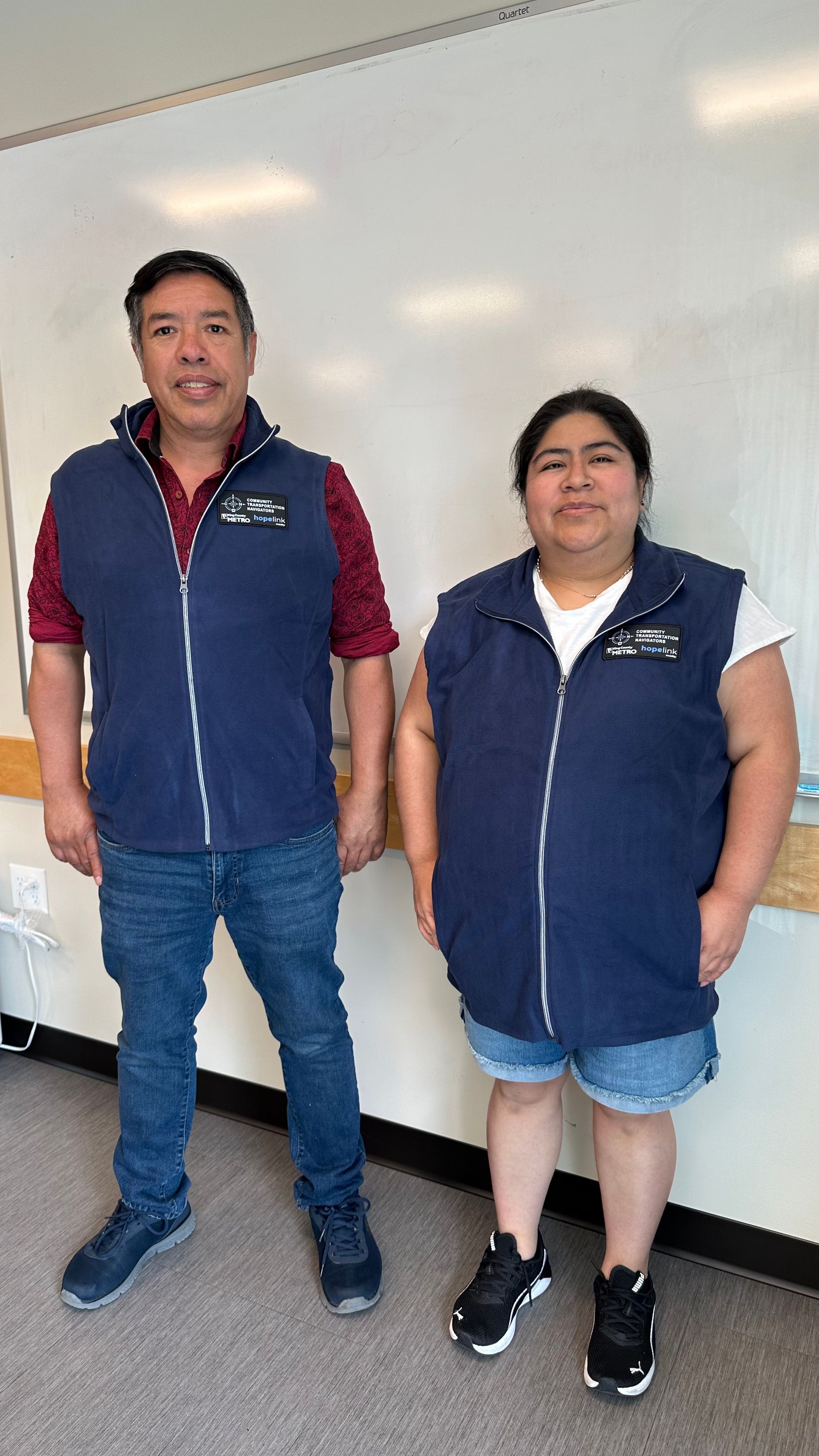
Manuel Perez (pictured on the left)

Originally from Victoria de Durango, Mexico, Manuel brings deep community ties and years of experience educating refugees, immigrants, older adults, and people with disabilities about available programs and services. As an immigrant in Seattle, he faced significant hardships, and language barriers made it difficult to access employment, medical care, food, and other essentials. Support from community-based services in his native language opened new opportunities for him. Since then, he has been committed to giving back by helping others access the same kind of support he once received. 

As a Community Transportation Navigator, he looks forward to supporting the community and sharing transportation information in a safe, effective, and meaningful way. 

Contact: Manuel Perez, MPResendiz@hopelink.org


Gloria Ramirez (pictured on the right)

Gloria Ramirez is an Indigenous ñuu savi woman from Mexico who is fluent in Sahim, Sau, and Spanish. She moved to the United States in 2003. Because she is visually impaired, she understands how important it is to know how to use public transportation. Having lived in states with limited transit options, she knows how difficult it can be to maintain independence without reliable service. Seattle’s public transit system has helped her access workshops and educational seminars about programs and resources for people with disabilities. As a community leader, she is dedicated to serving others with compassion. Her strong outreach experience and close work with the Spanish-speaking community make her an excellent Community Transportation Navigator. 

Contact: Gloria Ramirez, GRSantiago@hopelink.org


The Russian, Ukrainian Cohort (May 2026 - Current)

The Hopelink Mobility Team and Washington State Department Of Transportation (WSDOT) are incredibly excited to launch an extension of our Community Transportation Navigators Program - The Russian, Ukrainian Cohort!

All Navigators receive in-depth training on regional transportation mapping and resources during onboarding. With this knowledge, Navigators host outreach events using culturally fitting strategies to educate and engage community members. Navigators provide special support and creative solutions, meeting the needs of their communities. This Cohort will continue supporting the community through the remainder of 2026. Stay tuned for more Cohorts, that'll serve even more unique community groups.


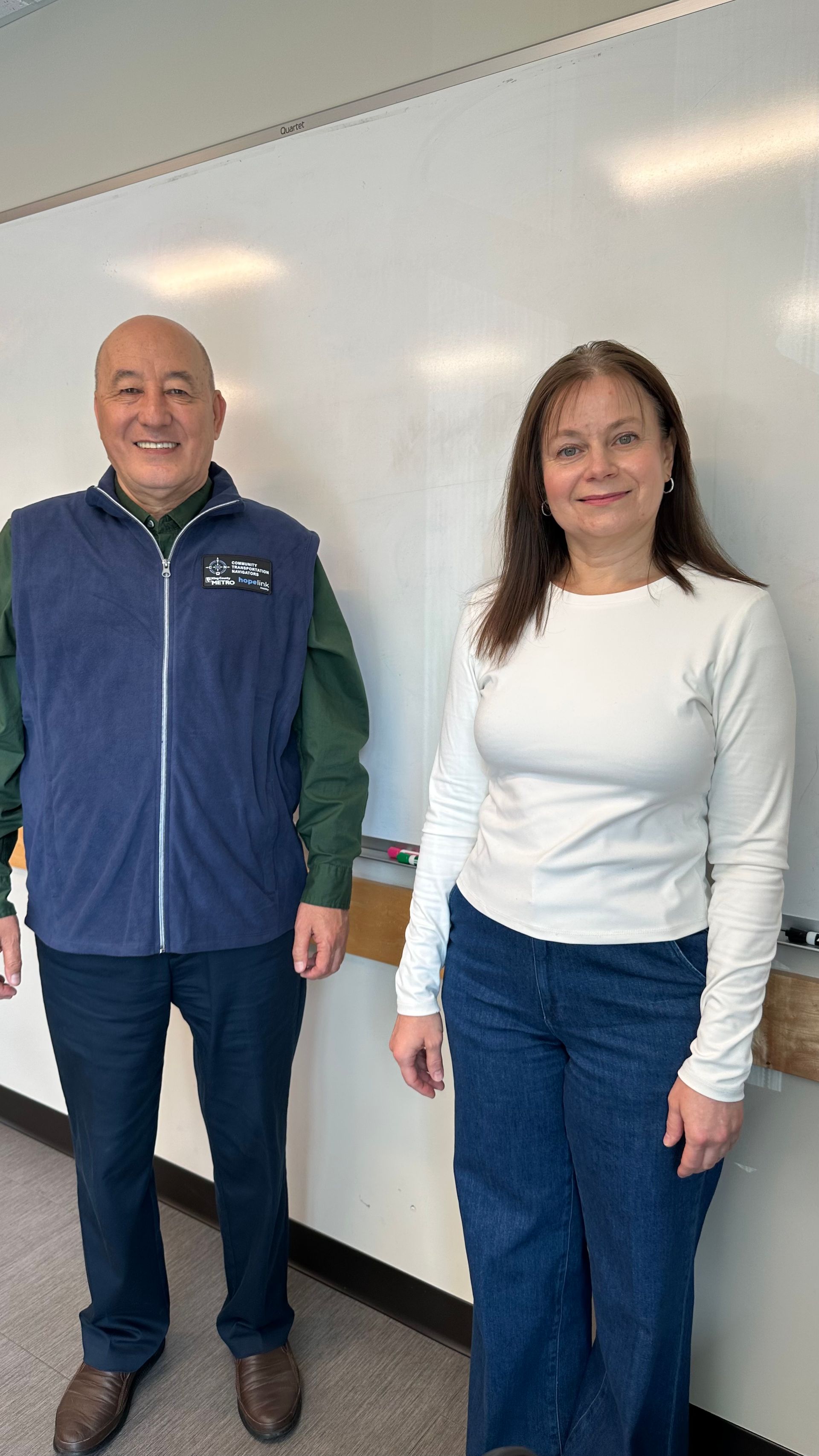
Kamit Satkeev (pictured on the left)

Originally from Kyrgyzstan and Ukraine, Kamit has extensive experience in education, technology, and community support. He holds both an M.S. and Ph.D. in Computer Science from Kyiv, Ukraine. His work in computer science, teaching, and customer support has built strong communication, problem-solving, and leadership skills. Through his experience with Hopelink’s Transportation Department, he saw how essential reliable transportation is for immigrants, refugees, older adults, and others facing barriers to services. 

Kamit now works at the International Rescue Committee (IRC) as a Youth Education Specialist, supporting students with education, technology, and online learning. 

He is passionate about helping people navigate systems, access resources, and build confidence in education and technology. His dedication to diverse communities, combined with his teaching and technical background, makes him a strong fit for Hopelink’s Community Transportation Navigator role. 

Contact: Kamit Satkeev, KSatkeev@hopelink.org


Maia Barladean (pictured on the right)

Originally from Russia, Maia moved to San Diego in 2019 and later settled in Seattle. Her years of experience as a caregiver for older adults and people with disabilities have shown her how isolating it can be to rely on others when transportation is limited. The Hopelink Community Transportation Navigator Program is a natural fit for her passion to support older adults, people with disabilities, refugees, and immigrants in the Ukrainian- and Russian-speaking communities as they learn to use public and alternative transportation to gain independence and improve their quality of life. 

Contact: Maia Barladean, MBarladean@hopelink.org


The Afghan Cohort (Sep 2025 - Current)
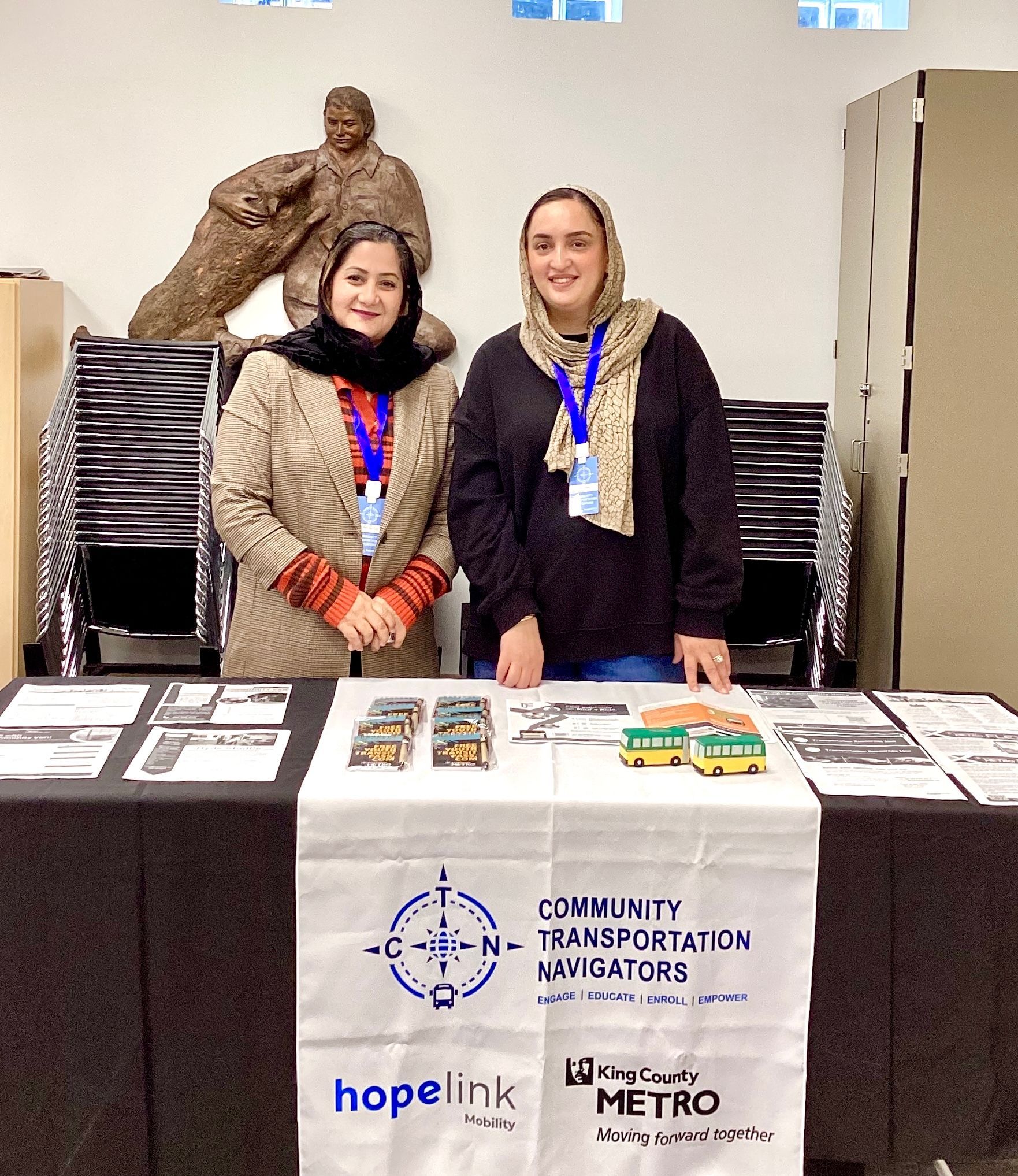
The Hopelink Mobility Team and Washington State Department Of Transportation (WSDOT) are incredibly excited to launch an extension of our Community Transportation Navigators Program - The Afghan Cohort!

All Navigators receive in-depth training on regional transportation mapping and resources during onboarding. With this knowledge, Navigators host outreach events using culturally fitting strategies to educate and engage community members. Navigators provide special support and creative solutions, meeting the needs of their communities. This Cohort will continue supporting the community through the remainder of 2026. Stay tuned for more Cohorts, that'll serve even more unique community groups.

Lina  (pictured on the left)

Lina Rauf Bayat, a Muslim Afghan American woman born in Kabul, Afghanistan, immigrated to US, to serve as a community Navigator, with King County Public Health for the past 4 years, representing The Afghan community. Prior to this, she worked with The Afghan Health Initiative as a Family Programs Coordinator, and at Adams interpretation services as an interpreter. She is fluent in Dari, Pashto and English. She received her bachelor’s degree in English literature and has since been educating and supporting various immigrant, Muslim women communities around her. Her passion for her community makes her a great fit as a Community Transportation Navigator with Hopelink.

Contact: Lina Bayat, LBayat@hopelink.org


Tuba  (pictured on the right)

Tuba Saad, an immigrant from Afghanistan, who now calls USA her home, grew up in a large family with six siblings, and learnt the value of community and support early on. After completing her undergrad from Afghanistan, she embarked upon her journey to the USA in 2019, seeking better opportunities. She dedicated herself towards improving her English skills and started volunteering actively across various human service sectors. She is a digital literacy tutor with the International Rescue Committee, empowering immigrant women to navigate the digital world confidently. She is also thrilled to be part of Afghan Advantage, where she works as an English coach for Afghan women, helping them thrive in their new environments. She is extremely passionate about education, empowerment, and creating positive change in the lives of others. Her motto is “Let’s connect and make a difference together!"

Contact: Tuba Saad, TSaad@hopelink.org

The Filipino Cohort (Dec 2023 - Mar 2025)

The Hopelink Mobility Team and King County Metro are incredibly excited to launch the first extension of our Community Transportation Navigators program, the Filipino Cultural Cohort!


All Navigators receive in-depth training on regional transportation mapping and resources during onboarding. With this knowledge, Navigators host outreach events using culturally fitting strategies to educate and engage community members. Navigators provide special support and creative solutions, meeting the needs of their communities. Our Filipino Cohort will continue supporting the community through the summer of 2024. Stay tuned for more Cohorts, that'll serve even more unique community groups.

Three women holding flowers in front of a white board that says

The Muslim Women Cohort (Jul 2024-Mar 2025)

The Hopelink Mobility Team and King County Metro are incredibly excited to launch an extension of our Community Transportation Navigators program, the Muslim Women Cohort!

All Navigators receive in-depth training on regional transportation mapping and resources during onboarding. With this knowledge, Navigators host outreach events using culturally fitting strategies to educate and engage community members. Navigators provide special support and creative solutions, meeting the needs of their communities. Our Muslim Women Cohort will continue supporting the community through the remainder of 2024 and 2025. Stay tuned for more Cohorts, that'll serve even more unique community groups.

Engage, Educate, Enroll, Empower

For any inquiry related to the Community Transportation Navigator's program that contains private or sensitive information, please submit an inquiry through our secured form below.  Please click the "General" button to send all inquiries to our general email, ctn@hopelink.org.


Frequently Asked Questions 

How to Get Involved with CTN:

Please contact Program Supervisor Sandy Phan at SPhan@hopelink.org to learn more about getting involved with the program!


  • What are Community Transportation Navigators?

    Community Transportation Navigators are community champions with unique lived experiences, cultural backgrounds, geographic relationships, or languages similar to those of the communities they serve. These individuals are passionate about supporting and educating others on transportation resources and solutions. Our Navigators are trained and knowledgeable about King County's regional public transit systems. Community Transportation Navigators ensure individuals are connected to transportation resources to break down transportation barriers. 

  • What services do CTNs provide?

    Community Transportation Navigators provide multiple forms of support and outreach. They offer one-on-one support for reduced fare applications, tabling community events, a shared resources library, trip planning assistance, and more! Get connected to one of our Navigators today; see our list of Filipino Navigators and their contact information. 

    Community Transportation Navigators provide the following assistance.

    • Empower: Creating trust and building strong relationships, supporting individuals and partners riding transit, and enabling others to make changes that improve mobility access and freedom.
    • Educate: Providing accurate and updated information on transit system changes and connecting community members to personalized resources and alternative services.
    • Enroll: Eliminating administrative barriers to community access, reduced fare options, and eligibility requirement programs.
    • Engage: Initiating ongoing discussions and listening to community feedback and concerns while providing alternatives and options.


  • Who is eligible to receive CTN services?

    All community members are eligible to receive Community Transportation Navigators services!


    CTN’s main goal is to connect those in need with transportation options and opportunities. We aim to address individual needs, support mobility, and improve confidence, access, and independence.


    Community Transportation Navigators provide information in a culturally inclusive manner to connect with the "hardest-to-reach." 


  • How can communities start a CTN Cohort?

    Interested in starting a CTN Cohort in your community? Contact Sara Sisco, Senior Manager of Mobility Education and Outreach for more information on designing a cohort to connect local community groups with transportation resources and customized supports.

  • Who funds CTN?

    The current Filipino Cohort is funded through partners at King County Metro. 


    CTN is getting ready to launch our next cohort with the Health Through Housing Initiative, which will support HTH residents in connecting with transportation resources. 


    Hopelink Mobility Management, in partnership with multiple agencies, provides program administration and operations for the Community Transportation Navigators program.


CTN Core Pillars:


  • Empower: Creating trust by building strong relationships to support individuals and partners riding transit while enabling others to make changes that improve mobility access and freedom.
  • Educate: Providing accurate and updated information on transit system changes by connecting community members to personalized resources and alternative services.
  • Enroll: Eliminating administrative barriers for community access to reduced fare options and eligibility requirement programs.
  • Engage: Initiating ongoing discussions and listening to community feedback and concerns while providing alternatives and options.


Resources and Learning:

Click here for the latest updates as the Community Transportation Navigators program continues to grow.

One Pager Program Overview

Our Funding Partners

A black and white logo for king county metro
The hopelink logo is blue and white on a white background.