50 Years of the Rehabilitation Act

February 8, 2024

Celebrating Inclusion in Community!

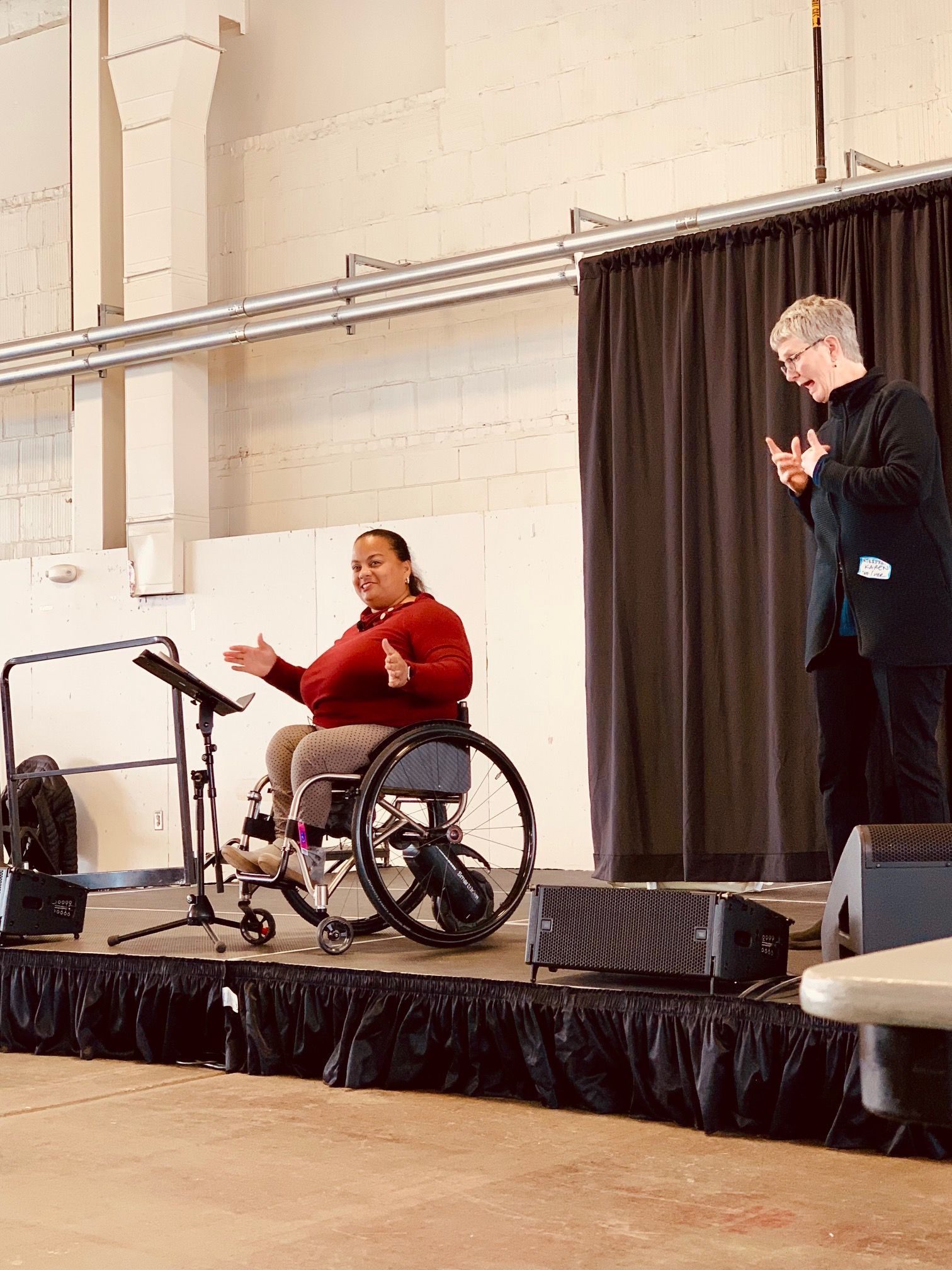
Anjali Forber-Pratt, PhD and the sign language interpreter on a stage. Dr. Forber-Pratt is wearing a red shirt and using her hands to talk about community and the Rehab Act

On January 20, 2024, the community came together to celebrate 50 years of the Rehabilitation Act at Magnuson Park’s Hanger 30. The event was organized by the City of Seattle, ARC, University of Washington, The Seattle Public Library, Studio Pacifica, Age Friendly Seattle, Northwest ADA Center, and the National Federation of the Blind Washington. The keynote speaker was Dr. Anjali J. Forber- Pratt, Activist, Paralympic Medalist, Director of the National Institute of Disability, and Independent Living and Rehabilitation Research.


The event included a performance by Fantasy A, a lecture on the history of Section 504 of the Rehabilitation Act by Sushil Oswal, Ph.D., University of Washington, and ASL Story Telling by Loni Friedman. 


The Rehabilitation Act of 1973, as Amended (Rehab Act) prohibits discrimination based on disability in programs conducted by federal agencies, receiving federal financial aid, federal employment, and employment practices of federal contractors. Sections 503 and 504 of the Rehab Act are well known in education settings for supporting students with disabilities. Additionally, there are broad applications of the Rehab Act for labor standards programs that receive federal funding.” 
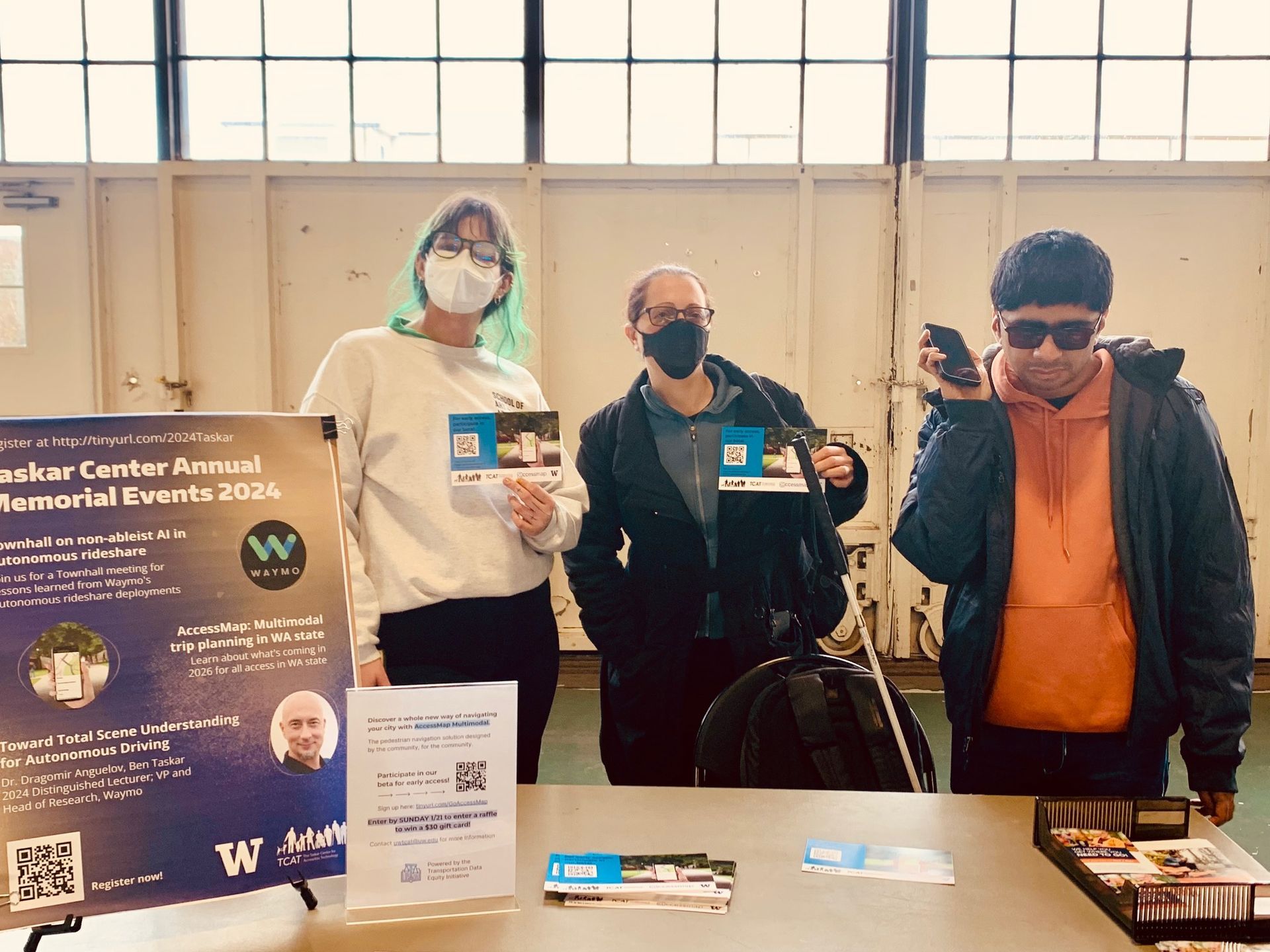
Three people, one with a white cane, in front of a table that has information about AccessMap.
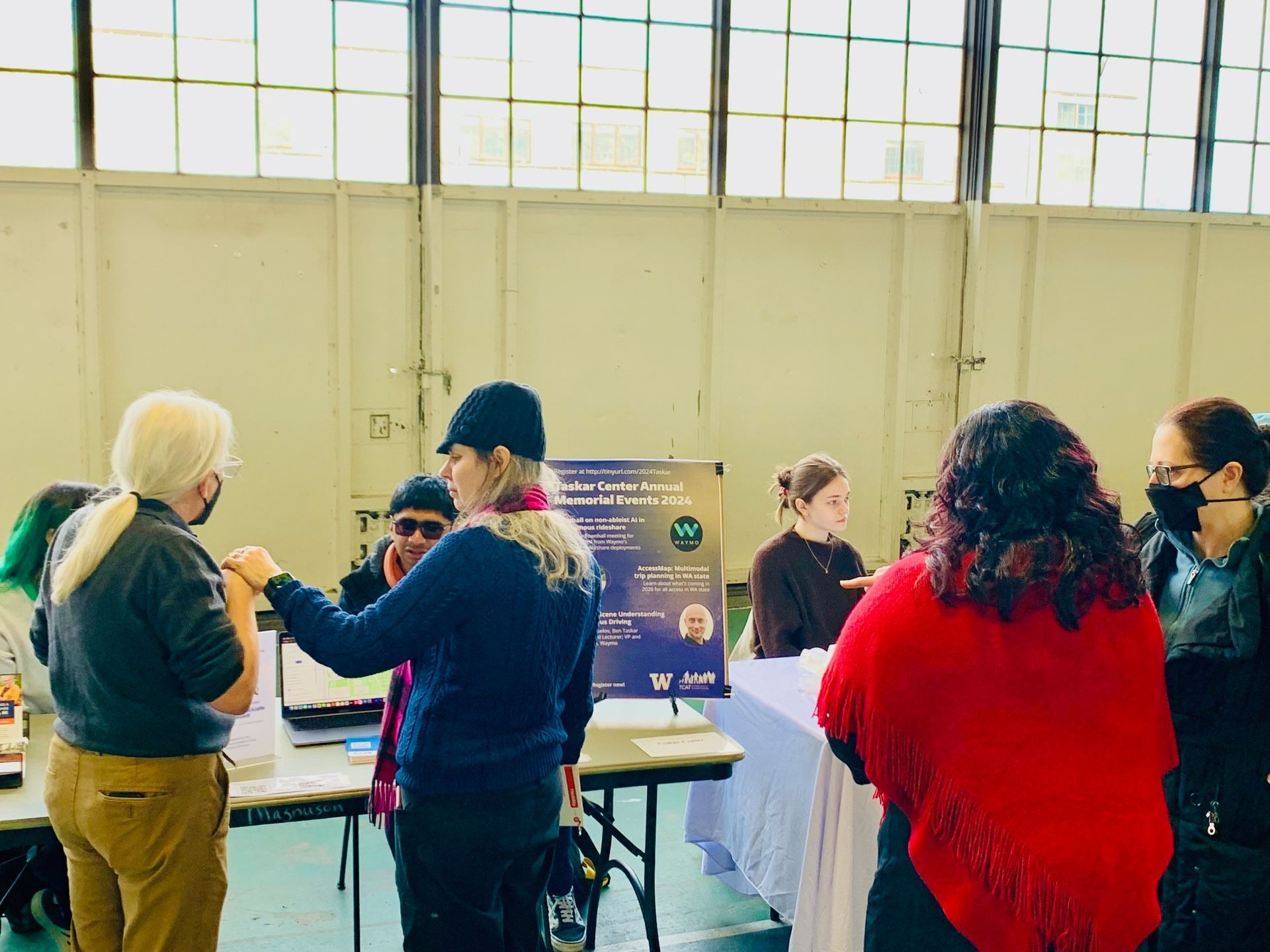
Many people with a variety of disabilities standing by the AccessMap TCAT table.

In attendance were several staff members from UW’s The Taskar Center for Accessible Technology. According to their website, “Sidewalks are the primary connecting fabric of our communities and the connection between all other travel options, and yet, for many of us, traveling on sidewalks can present many unanticipated challenges. AccessMap.app closes some of those gaps by incorporating detailed information about pedestrian ways and transit stations for instance, by displaying elevation changes, curb ramps and publicly accessible elevators. Additionally, users can specify information about their own mobility and trip preferences, and the automated routing service presents the best route for the profile".
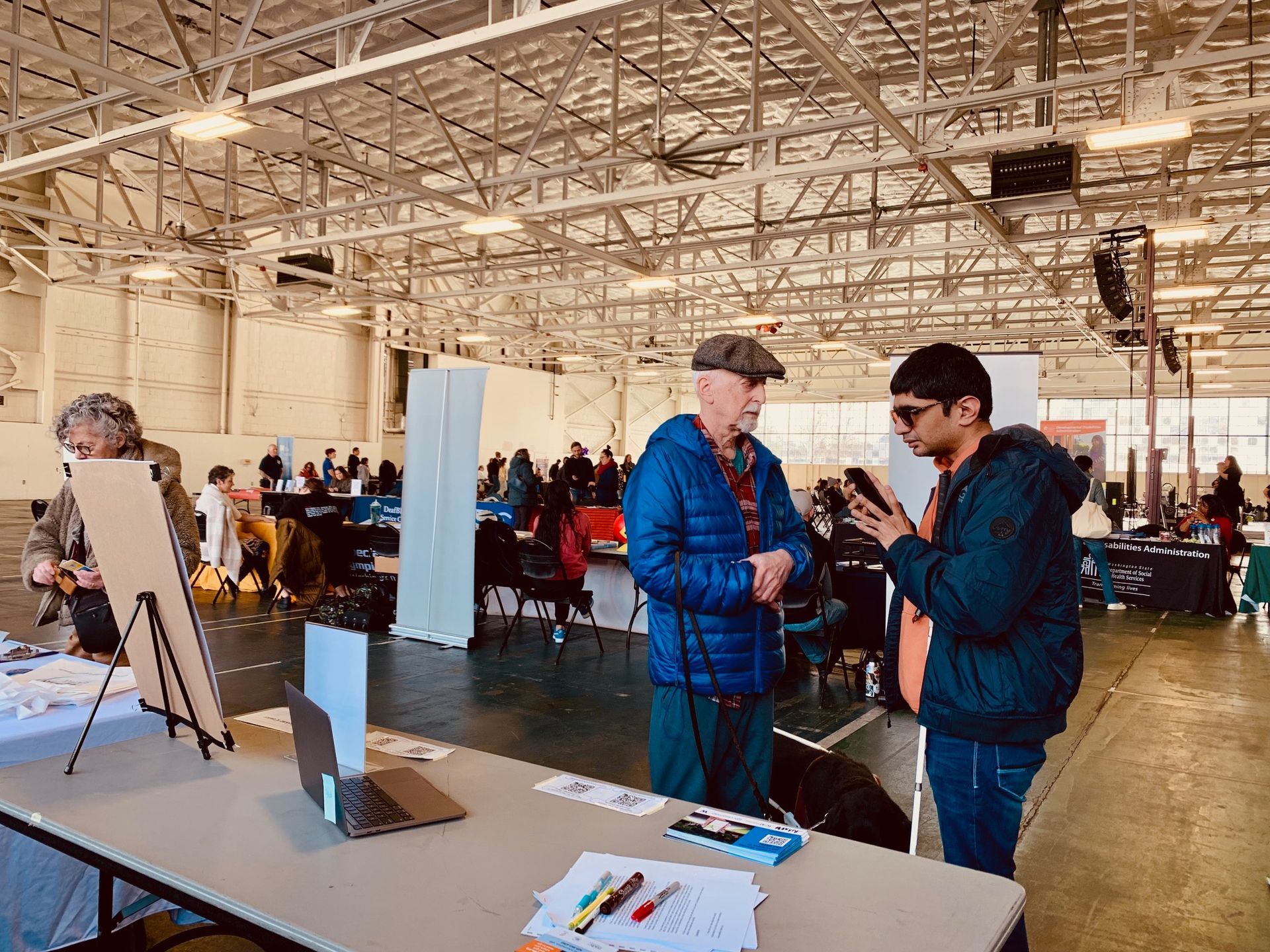
Kunal Mehta from The Taskar Center for Accessible Technology (TCAT) demonstrates AccessMap for Jeff Abrams, an advisor for Find a Ride.

Find a Ride, a program administered by Hopelink, was invited to recruit community testers for our new trip planner at the 50th Anniversary Celebration. Find a Ride is being developed in partnership with King County Mobility Coalition and Advisory Committee oversight. The program focuses on the transportation and access needs of older adults and people with disabilities. Hopelink’s trip planner works towards WCAG (Web Content Accessibility Guidelines) and section 508 conformances (section 508 is part of the Rehab Act). Find a Ride now includes nearly two dozen specialized transportation services for Pierce, King, and Snohomish counties that have never been coordinated in a trip planner. Read our roadmap and business plan to learn more. 
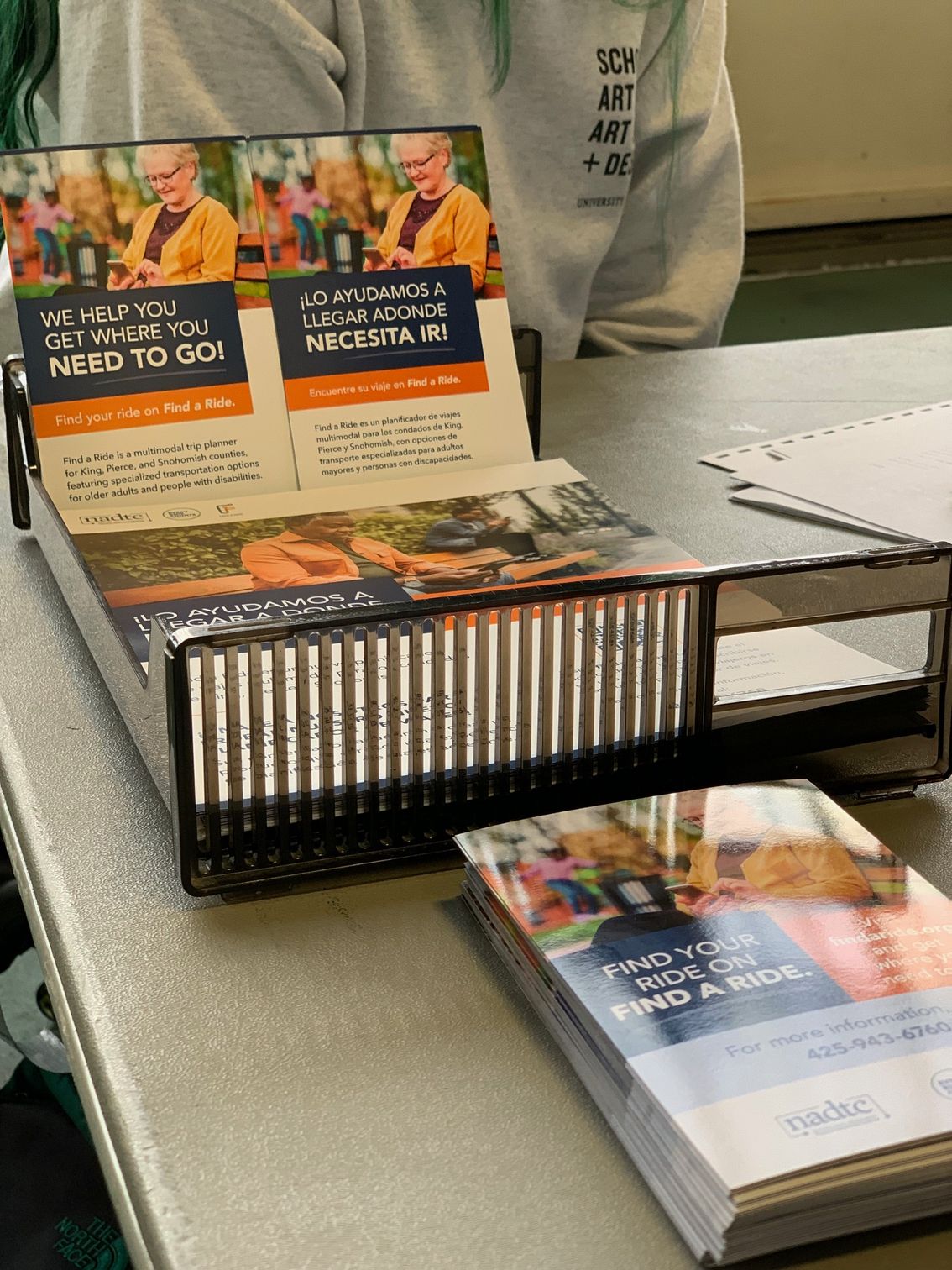
Branded materials for Find a Ride in Spanish and English with the blue and orange branding themes. Photo of woman on her phone with glasses and short grey hair.


Find a Ride’s trip planner is currently recruiting community testers. VisitFindARide.org to sign up and provide feedback. This feedback will create a unified program that delivers accessible trip-planning experiences. For more information, call 425-943-6760 and press 3. 


Below are additional photos from the fantastic event!
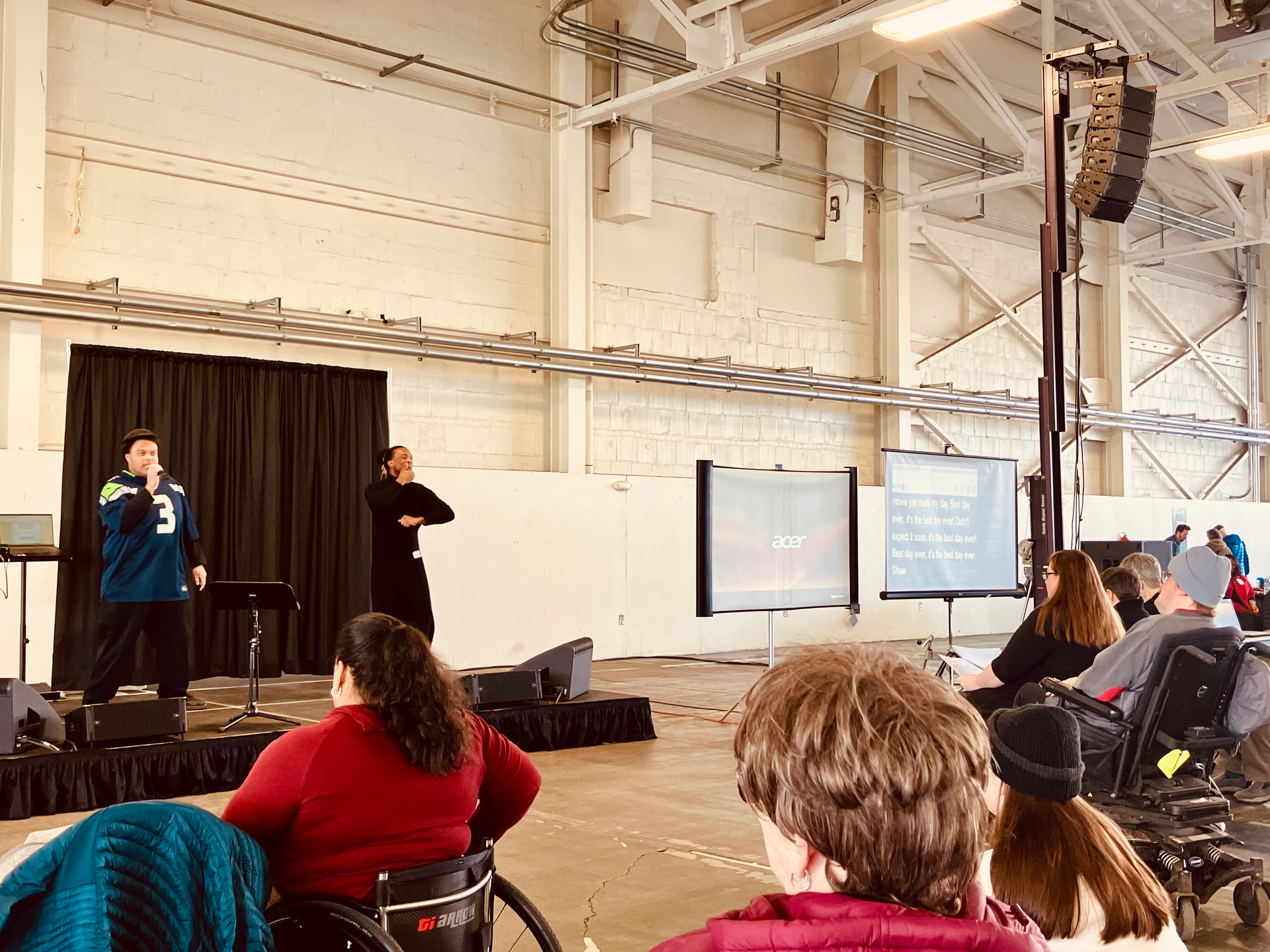

There was an uplifting performance from Fantasy A (Alex Hubbard), with ASL translation and CART (Communication Access Realtime Translation) services support.
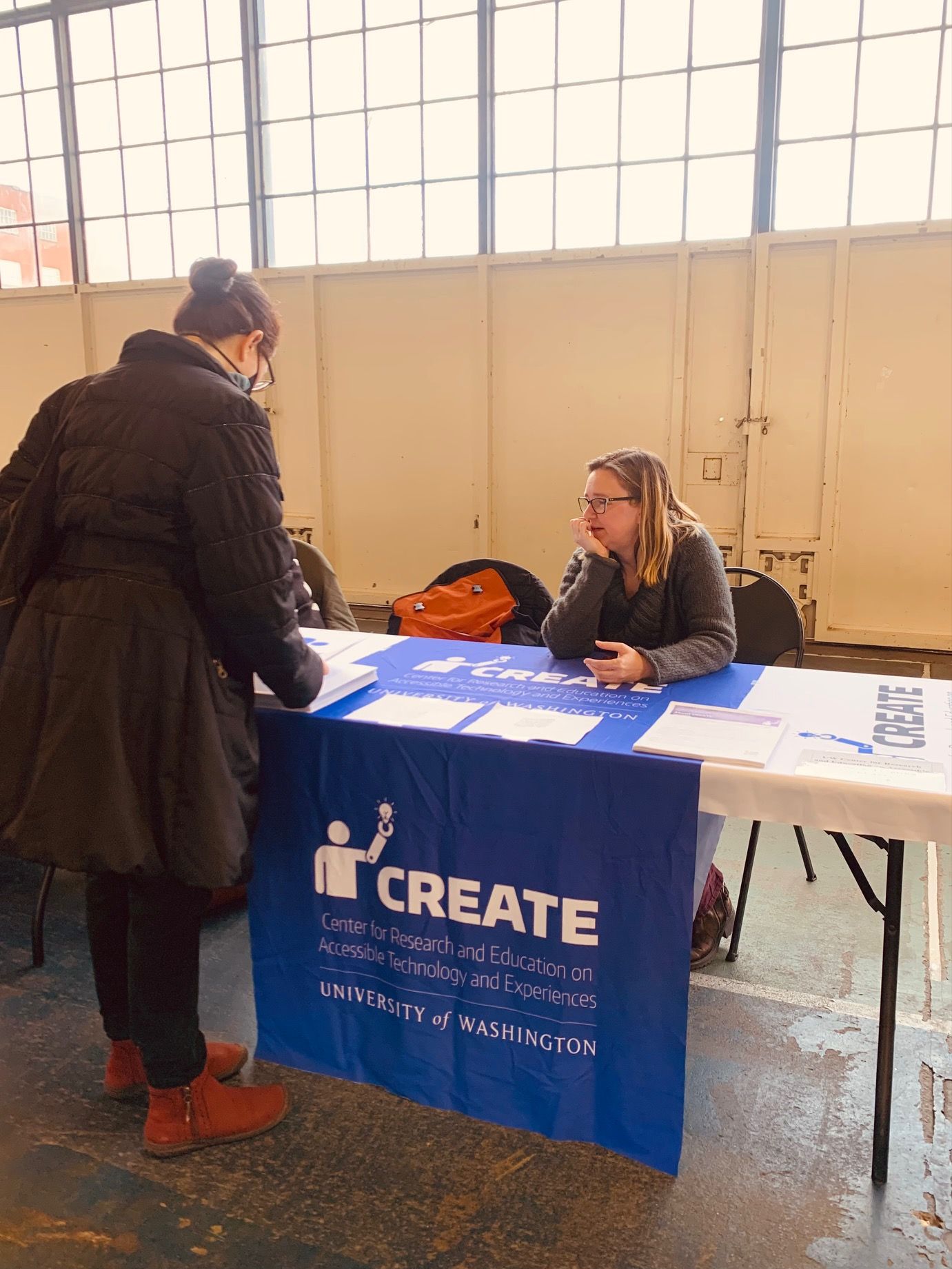
A table from UW’s Center for Research and Education on Accessible Technology and Experiences explained their interdepartmental collaboration.
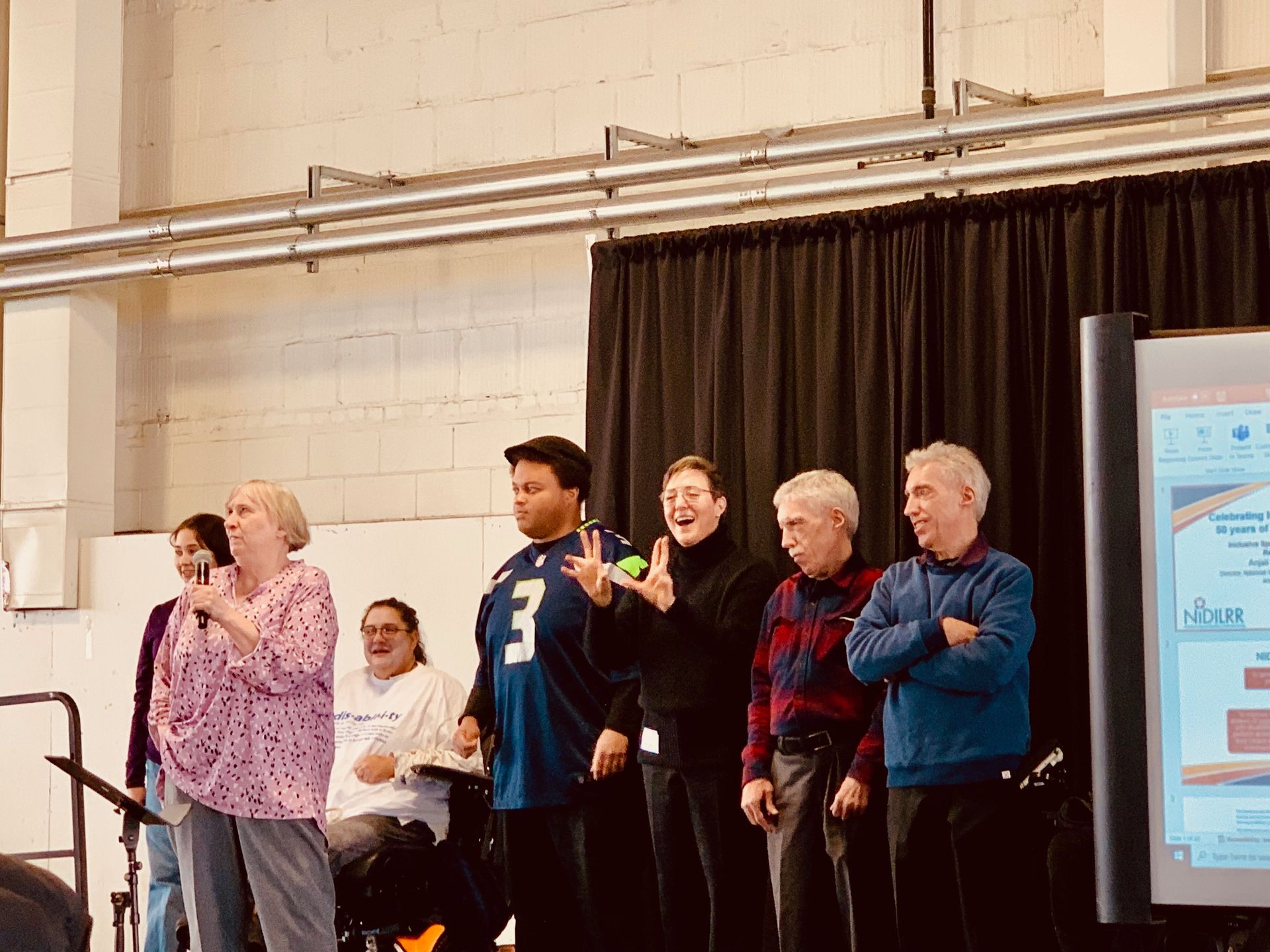
Several community members presented an engaging skit about the Rehab Act.
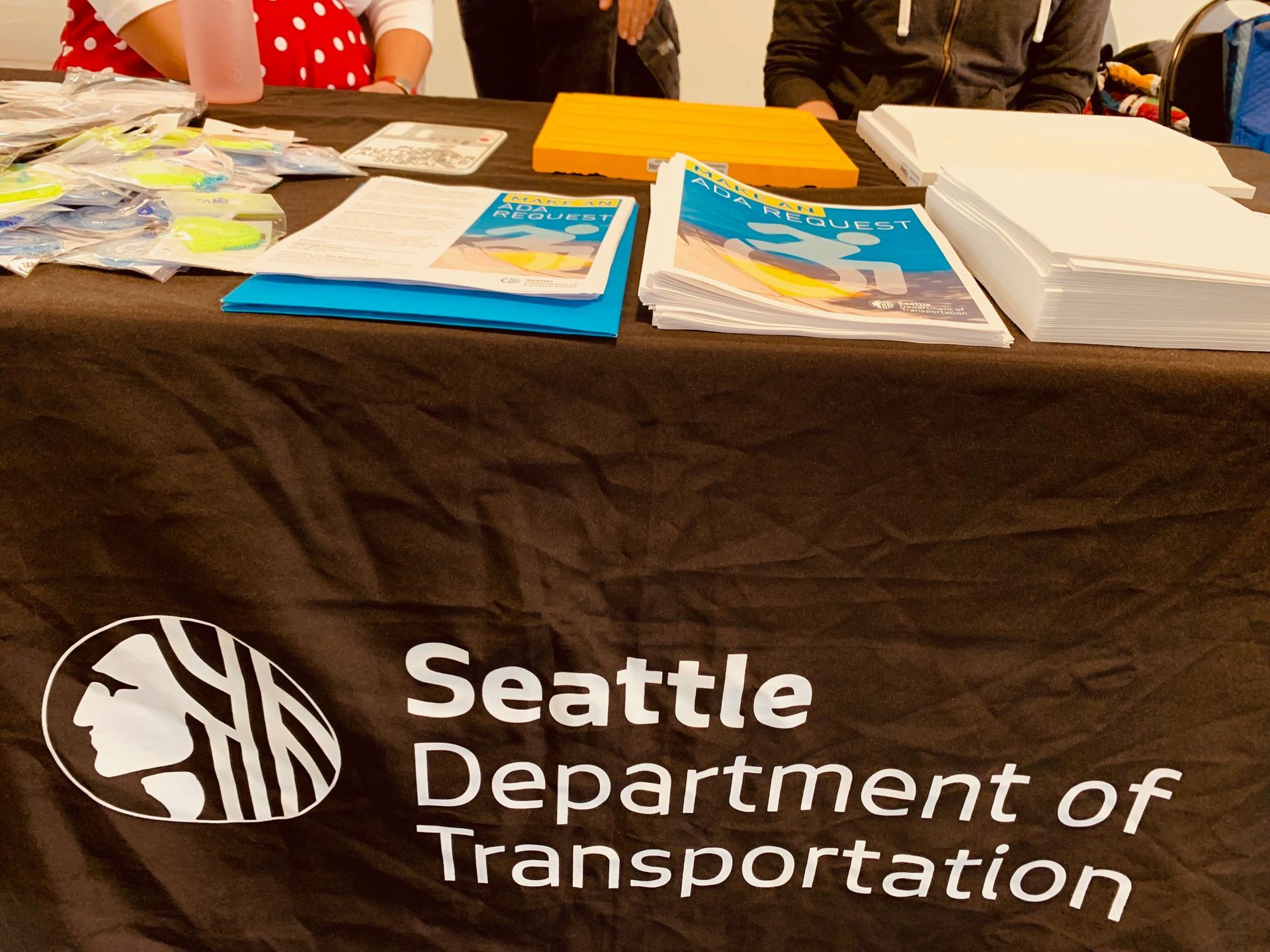
 A table from Seattle Department of Transportation focused on how to submit an ADA Request.
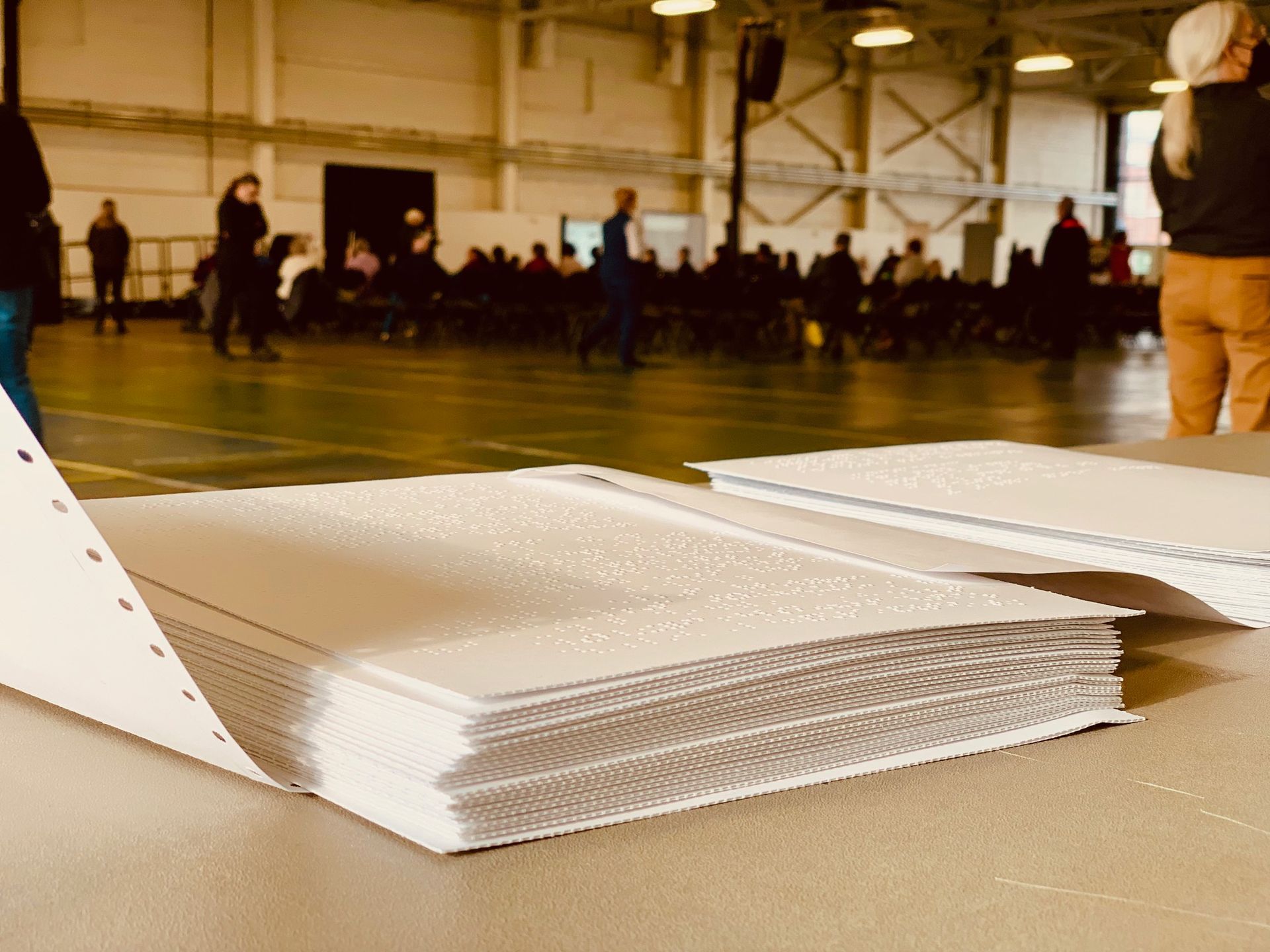
Materials were provided in Braille by several community partners.
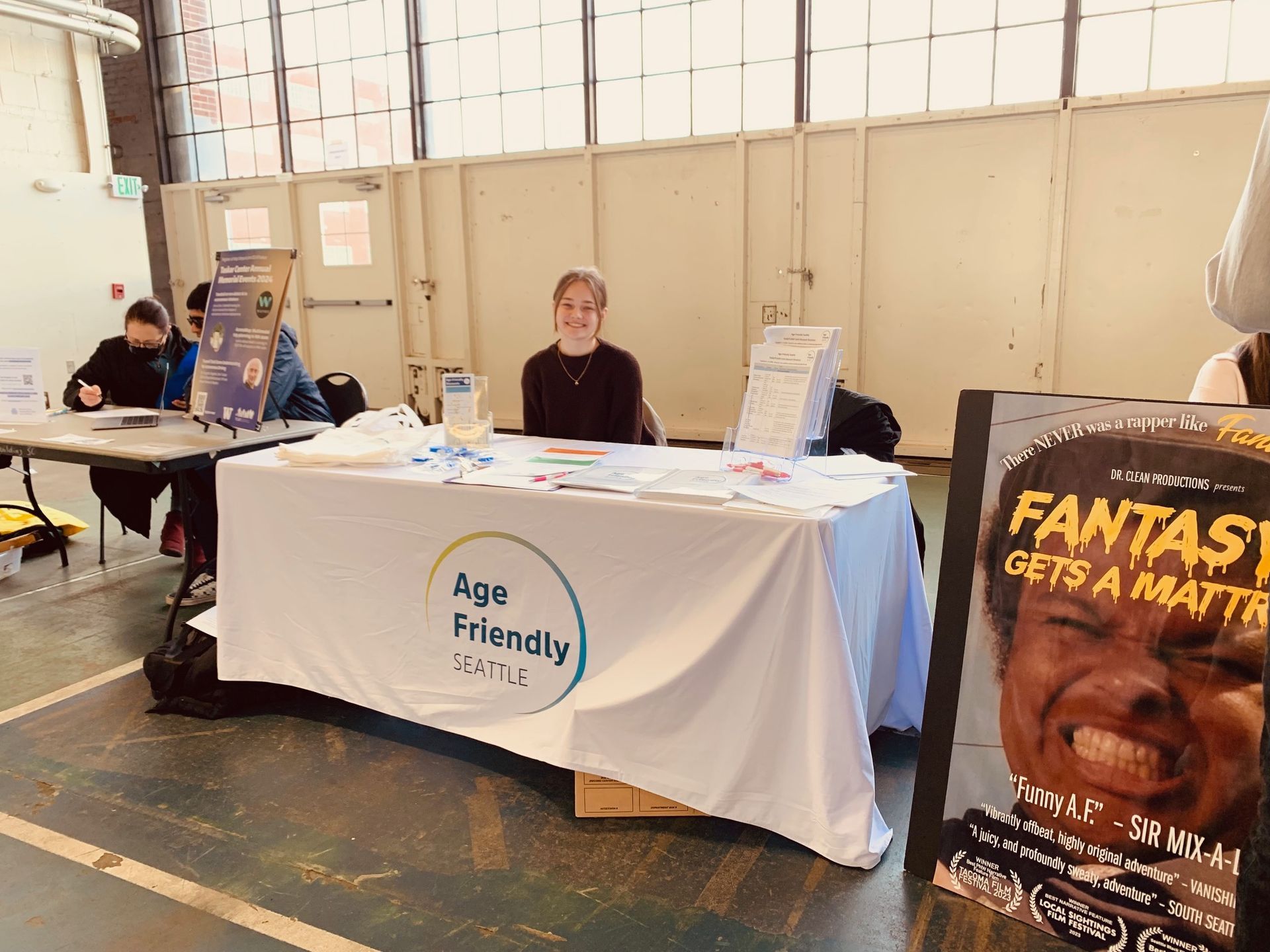
Age Friendly Seattle staff sitting at their table next to a Fantasy A Film Poster at the next table.

Mobility News

By Lyn McCarthy June 8, 2026
Stories Shape Systems
By Grace Georgitsis May 21, 2026
What is Find a Ride Phase 2? Hopelink Mobility is currently developing the Phase 2 of our One-Call/One-Click program, Find a Ride . Find a Ride already serves as a comprehensive database of transit and specialized transportation services across King, Pierce, and Snohomish counties, along with a trip planner that incorporates those services. In Phase 2, we plan to expand this program by creating a way for Find a Ride users to check their eligibility for several of these services at once. To learn more about Find a Ride Phase 2, read the Find a Ride Phase 2 Readiness blog post or this document explaining the project! Hack for Social Impact Hack for Social Impact is, in their own words, “A 501(c)(3) tech non-profit organization dedicated to solving real-world challenges by connecting engineers and data scientists with non-profits, NGOs, and civic organizations.” Their flagship event is an annual hackathon where nonprofits bring live technology problems for participants to tackle. In April 2026, Hack for Social Impact hosted a hackathon in Seattle in partnership with the Women in Tech Regatta . Hopelink brought Find a Ride Phase 2 as a challenge for the participants, asking them to find a way to streamline eligibility determination processes and applications for transportation services in the Puget Sound Region. More details on this challenge, and our vision for Phase 2, can be find in the Find a Ride “Hack-Pack.” Outputs: Two teams took on the Find a Ride Phase 2 challenge and dedicated several hours to reimagining how people across the Puget Sound region enroll in specialized transportation services. Each took their own unique approach to developing a framework for Phase 2. Hopelink Team - This team focused on the rider experience from intake to approval. Their solution centers on a single application that instantly shows users which services they qualify for, complete with match scores and plain-language explanations for any services they don't qualify for. Key features include: Instant eligibility checking with a match score for each available service One centralized application submitted to individual services for review Upfront document requirements so riders know what they need before they apply Admin dashboard for Hopelink staff to manage vendors, track applications, and access data insights — such as why users declined certain services Client-side application tracker for services with longer approval timelines RideReady Team – This team took a bigger-picture approach, tackling the fragmentation across the nonprofit rideshare landscape. Rather than improving one intake flow, they proposed a statewide verification platform — verify your eligibility once with Hopelink, then use that credential to access dozens of partner organizations, much like logging into a website with your Google account. Key features include: "Verify once, use everywhere" — a single sign-on model compatible with partner rideshare organizations across Washington state Multi-language support — 6 languages available on the web interface, and 57 via a built-in voice chat assistant Voice chat assistant designed for accessibility, particularly for elderly riders and non-English speakers Results: The RideReady team won the Hackathon with their vision of Find a Ride Phase 2! Click here to see the site that they created. This site is a prototype and is meant to serve as proof of concept. The Find a Ride team will be taking insights into consideration from both projects as we develop Phase 2 but will ultimately continue to prioritize input from our partners. What made this hackathon so valuable wasn't just the quality of individual solutions — it was seeing two different teams independently confirm that the same core problems need solving: too much repeated data entry, unclear eligibility, and barriers that make accessing transportation harder than it needs to be. The ideas these teams prototyped, along with feedback from our dedicated partners, will inform how we shape Find a Ride Phase 2. We're grateful to Hack for Social Impact, the Women in Tech Regatta, and every participant who brought their expertise to this challenge. Stay tuned for more updates as Phase 2 continues to take shape!  To learn more about Find a Ride Phase 2, read the Find a Ride Phase 2 Readiness blog post on the KCMobility website or join us at a Find a Ride Advisory meeting! For an invite, reach out to Grace Georgitsis at ggeorgitsis@hopelink.org, or by phone at 425-625-6836.
By Lyn McCarthy May 9, 2026
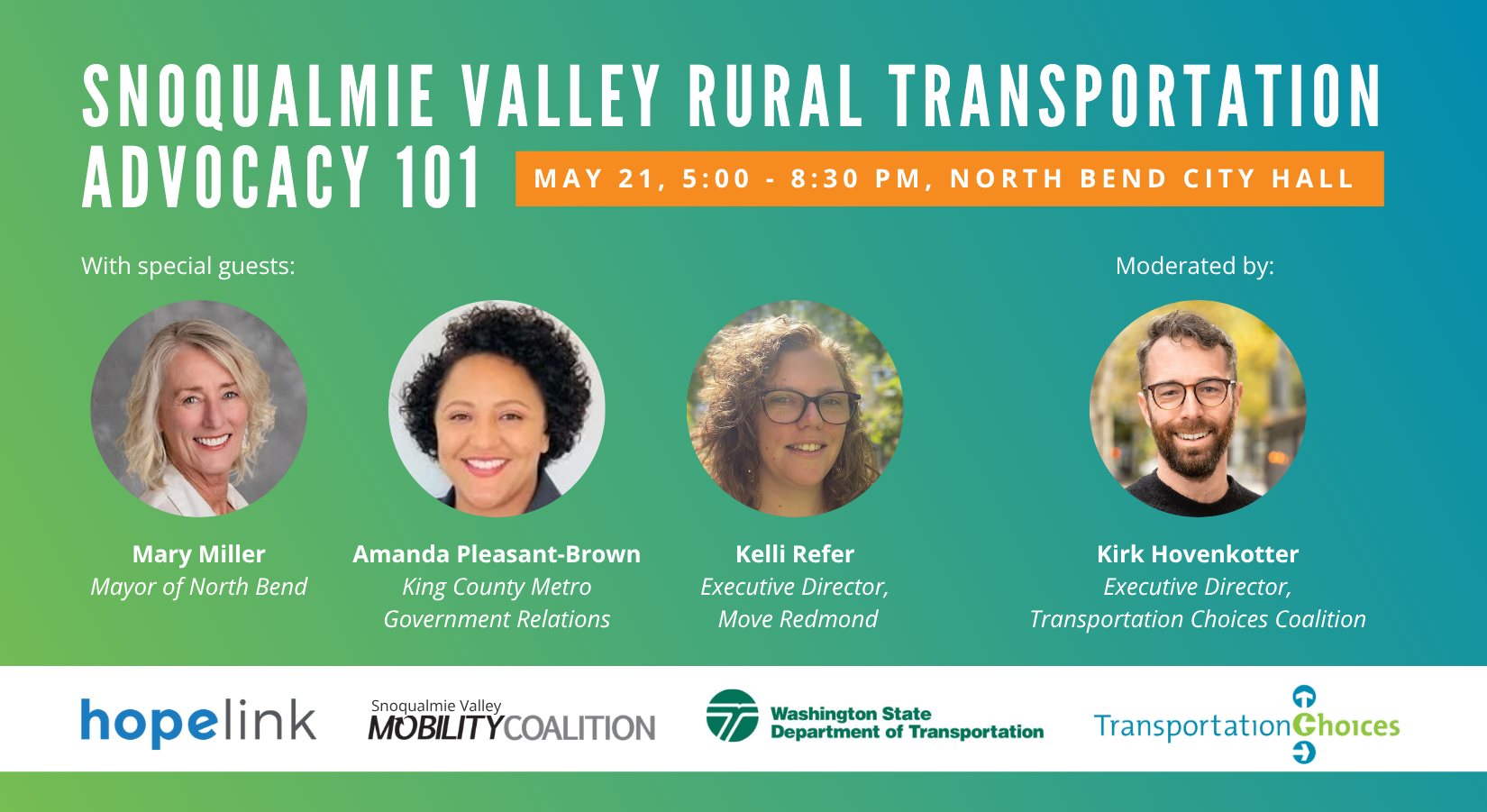
Thursday, May 21st 5:00-8:00pm, North Bend City Hall
Screenshot of Spinner and Transportation Options Page
By Laura Loe March 25, 2026
With the support of two vendors, Anthro-Tech and Cambridge Systematics, and incorporating feedback from our Mobility Team, various Mobility Coalition Partners and individuals with disabilities, we are excited to bring you an updated version of Find a Ride.
By Lyn McCarthy February 10, 2026
Your Story Matters
RARET Logo, RARET stands for Regional Alliance for Resilient and Equitable Transportation
By Dean Sydnor February 6, 2026
Read the full 10-page report here: RARET Flooding 2025 Transportation Report
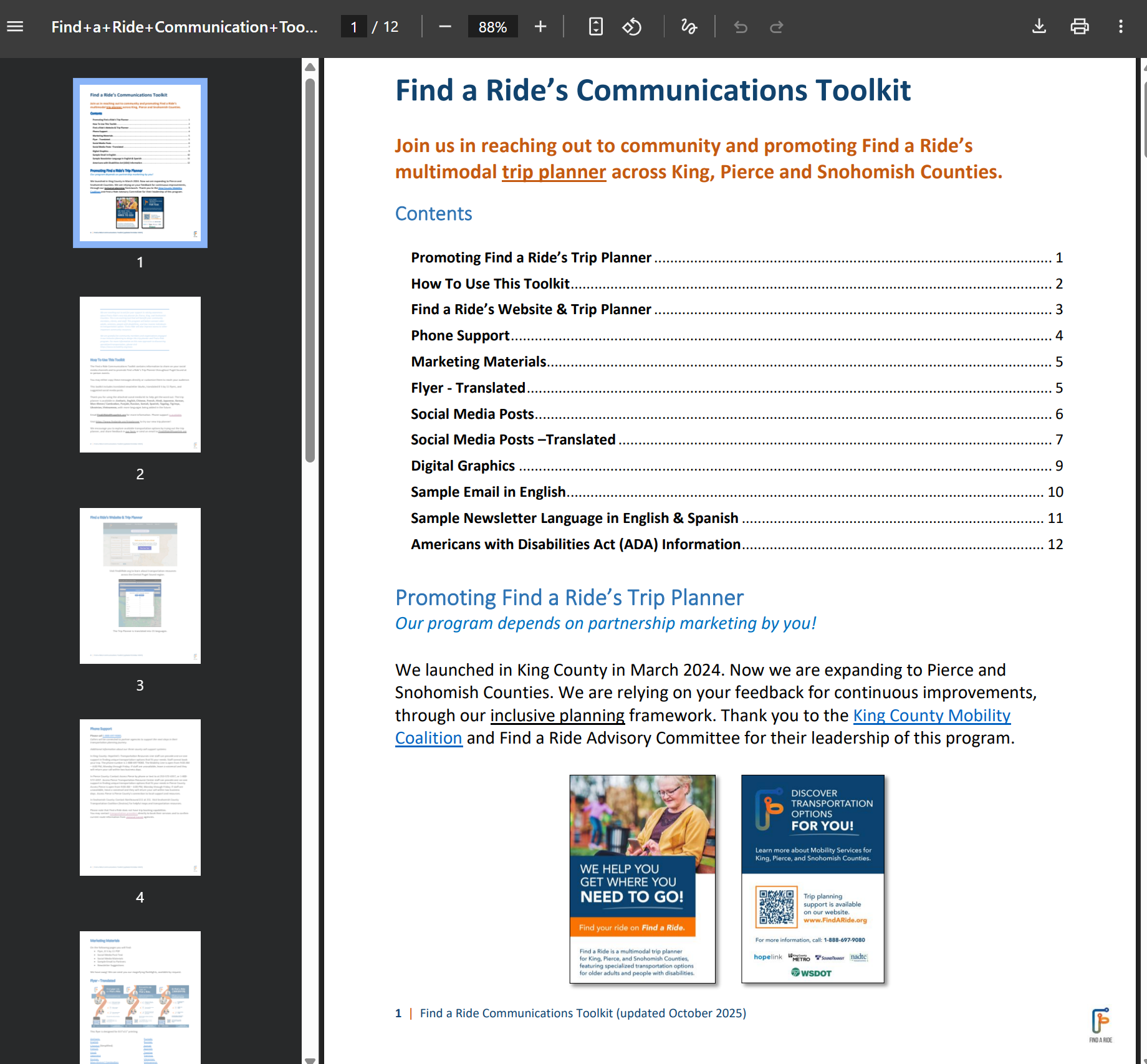
PDF of Find a Ride toolkit
By Laura Loe October 17, 2025
The Find a Ride Communications Toolkit contains information to share on your social media channels and to promote Find a Ride’s Trip Planner throughout Puget Sound at in-person events.
Logo Find a Ride Phase 2
By Laura Loe August 7, 2025
Phase 2 seeks to streamline rules and procedures for rider intake, eligibility determination, and enrollment verification in Puget Sound
By Lyn McCarthy July 28, 2025
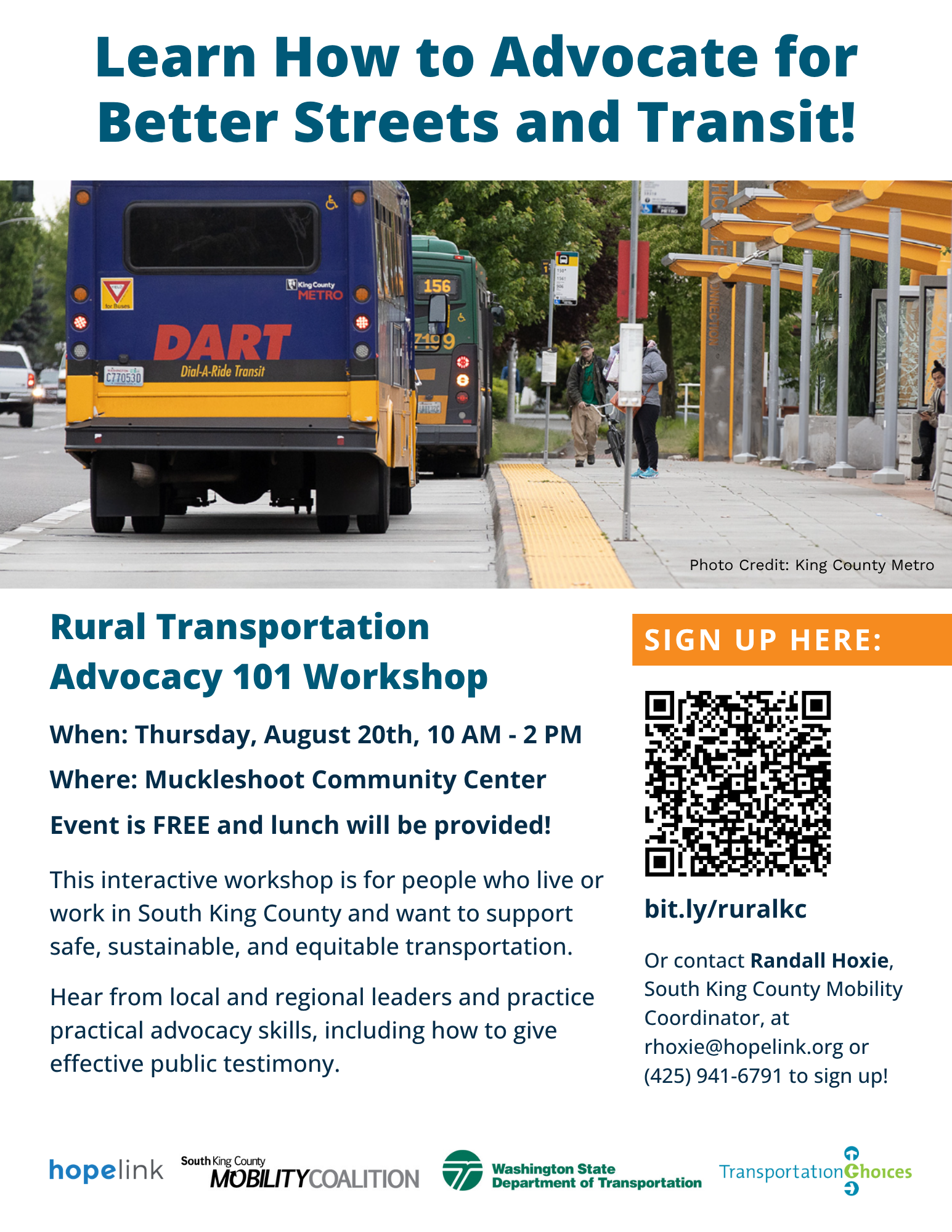
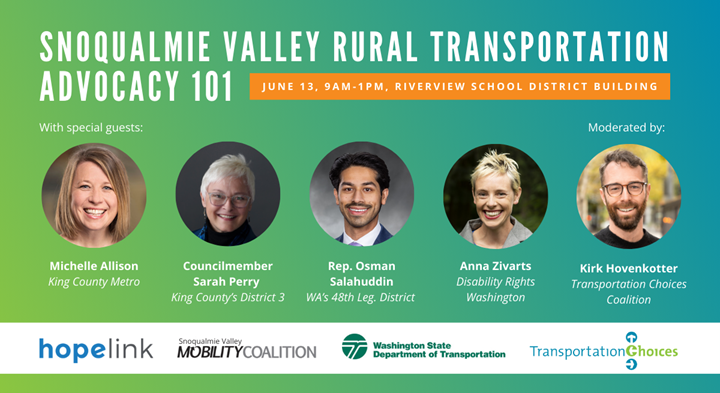
SVMC hosted a Rural Transporation Advocacy 101 Workshop on June 13th, 2025
RARET logo
By Dean Sydnor July 17, 2025
Downstream Transportation Impacts of Medicaid Cuts & Changes, July 2025
More Posts