


Hopelink Mobility Coalitions 2020 Accomplishments
January 5, 2021
2020 was a year for the history books...
For transportation in King County, 2020 began with the contention over Initiative I-976 and vehicle tabs, saw drastic ridership changes due to COVID-19, forced transportation providers to reckon with codes of equity and enforcement, and ended with the recognition that we will continue to deal with the consequences of these variables in the future. Amongst the institutional struggles, people needed to get around. Intentionality about access and services meant that mobility worked to support the most meaningful of trips throughout 2020. During this time, collaboration, coordination, and advocacy were the guiding strategies that keeping our mobility networks working for all, now and in the future.
Luckily, Hopelink’s Mobility Management team spent the year adapting to these changes. The Mobility Coalitions housed at Hopelink have wrapped up a busy, innovative 2020. From switching to virtual engagement and outreach to evolving the accessibility and equity pursuits of projects in creative ways, our Mobility Coalitions have kept pace with the hectic year.
Hopelink Mobility Management’s Coalitions are made up of the King County Mobility Coalition, the Eastside Easy Rider Collaborative, the North King County Mobility Coalition, the South King County Mobility Coalition, the Snoqualmie Valley Transportation Coalition, and the Regional Alliance for Resilient and Equitable Transportation. Working across the region, our Coalitions hosted a total of 34 meetings in 2020. During these meetings, each Coalition welcomed a suite of presentations, discussions, and information sharing opportunities to keep our partners engaged and informed about the rapidly changing mobility scene.
The North King County Mobility Coalition
concluded a Gaps Analysis Project to understand the mobility challenges of special needs populations in their region, while the Eastside Easy Rider Collaborative
began conversations to strengthen Volunteer Driver Transportation Program recruitment. The King County Mobility Coalition’s Access to Healthcare Group and South King County Mobility Coalition
wrapped up the innovative Care Mobility Rewards Program Pilot. The Snoqualmie Valley Transportation Coalition
produced the first-of-its-kind 5-Year Transportation Plan! As the organizer for emergency transportation management for vulnerable populations in King, Pierce, and Snohomish Counties, the Regional Alliance for Resilient and Equitable Transportation
initiated new calls, partnerships, and information distribution to act quickly and proactively in the ever-changing mobility operations space. These are just a few of the great things our Coalitions worked on in 2020!
To learn more about each Coalition’s 2020 achievements, find them here:
We’re looking forward to bringing what we learned in 2020 with us into 2021, with hopefully some more positive developments in the mobility space coming our way.
Mobility News
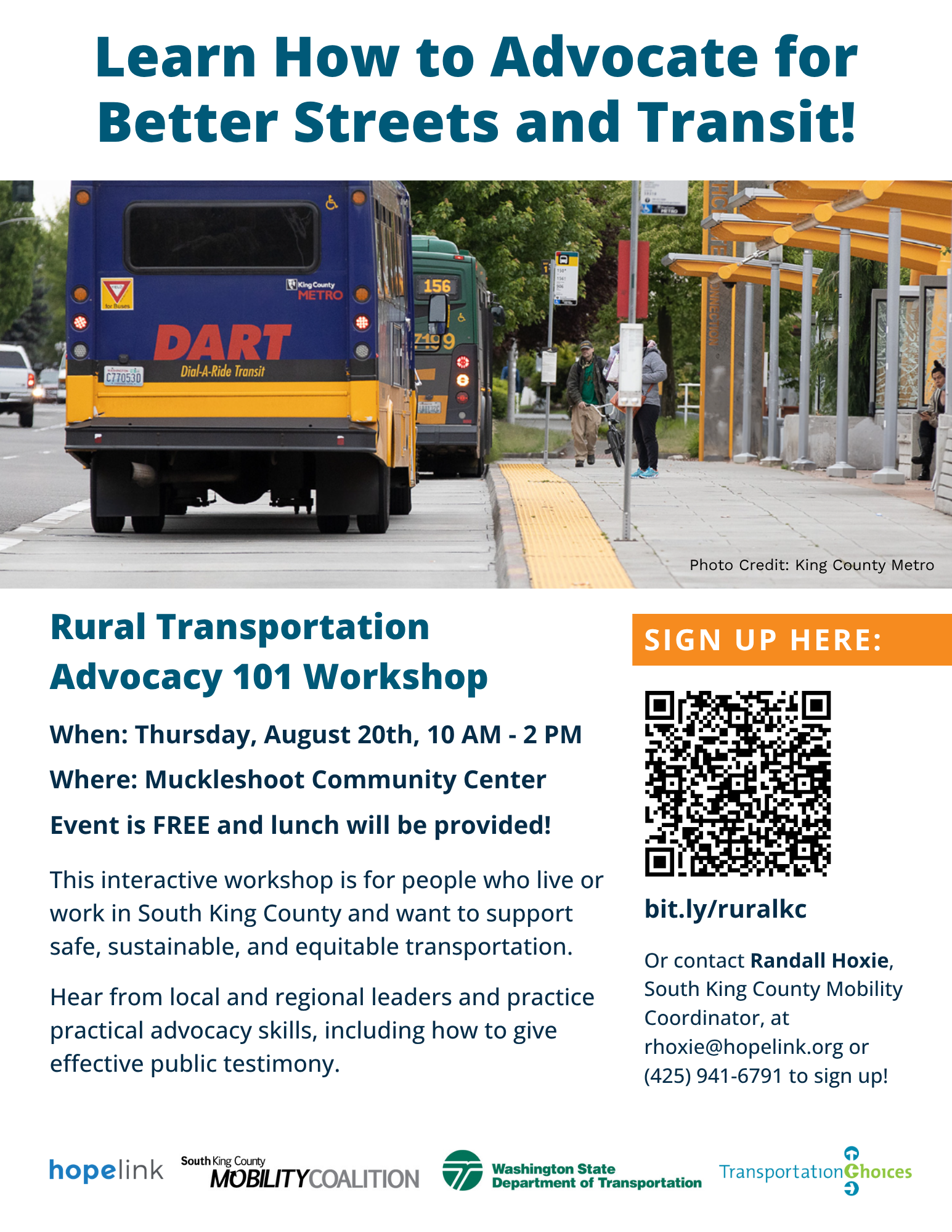
Join Transportation Choices Coalition and the South King County Mobility Coalition for a free advocacy workshop on August 20th.
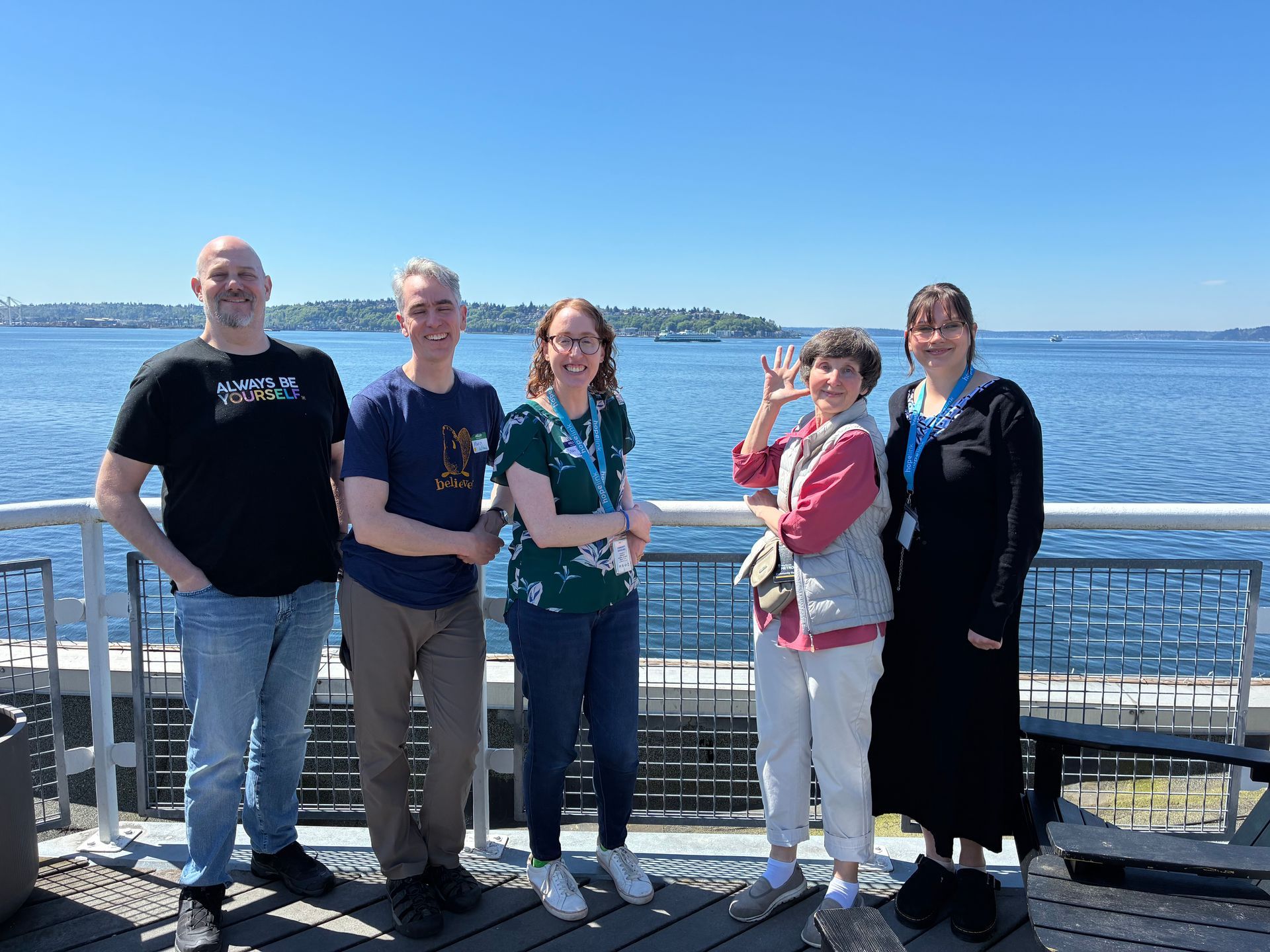
What is Find a Ride Phase 2? Hopelink Mobility is currently developing the Phase 2 of our One-Call/One-Click program, Find a Ride . Find a Ride already serves as a comprehensive database of transit and specialized transportation services across King, Pierce, and Snohomish counties, along with a trip planner that incorporates those services. In Phase 2, we plan to expand this program by creating a way for Find a Ride users to check their eligibility for several of these services at once. To learn more about Find a Ride Phase 2, read the Find a Ride Phase 2 Readiness blog post or this document explaining the project! Hack for Social Impact Hack for Social Impact is, in their own words, “A 501(c)(3) tech non-profit organization dedicated to solving real-world challenges by connecting engineers and data scientists with non-profits, NGOs, and civic organizations.” Their flagship event is an annual hackathon where nonprofits bring live technology problems for participants to tackle. In April 2026, Hack for Social Impact hosted a hackathon in Seattle in partnership with the Women in Tech Regatta . Hopelink brought Find a Ride Phase 2 as a challenge for the participants, asking them to find a way to streamline eligibility determination processes and applications for transportation services in the Puget Sound Region. More details on this challenge, and our vision for Phase 2, can be find in the Find a Ride “Hack-Pack.” Outputs: Two teams took on the Find a Ride Phase 2 challenge and dedicated several hours to reimagining how people across the Puget Sound region enroll in specialized transportation services. Each took their own unique approach to developing a framework for Phase 2. Hopelink Team - This team focused on the rider experience from intake to approval. Their solution centers on a single application that instantly shows users which services they qualify for, complete with match scores and plain-language explanations for any services they don't qualify for. Key features include: Instant eligibility checking with a match score for each available service One centralized application submitted to individual services for review Upfront document requirements so riders know what they need before they apply Admin dashboard for Hopelink staff to manage vendors, track applications, and access data insights — such as why users declined certain services Client-side application tracker for services with longer approval timelines RideReady Team – This team took a bigger-picture approach, tackling the fragmentation across the nonprofit rideshare landscape. Rather than improving one intake flow, they proposed a statewide verification platform — verify your eligibility once with Hopelink, then use that credential to access dozens of partner organizations, much like logging into a website with your Google account. Key features include: "Verify once, use everywhere" — a single sign-on model compatible with partner rideshare organizations across Washington state Multi-language support — 6 languages available on the web interface, and 57 via a built-in voice chat assistant Voice chat assistant designed for accessibility, particularly for elderly riders and non-English speakers Results: The RideReady team won the Hackathon with their vision of Find a Ride Phase 2! Click here to see the site that they created. This site is a prototype and is meant to serve as proof of concept. The Find a Ride team will be taking insights into consideration from both projects as we develop Phase 2 but will ultimately continue to prioritize input from our partners. What made this hackathon so valuable wasn't just the quality of individual solutions — it was seeing two different teams independently confirm that the same core problems need solving: too much repeated data entry, unclear eligibility, and barriers that make accessing transportation harder than it needs to be. The ideas these teams prototyped, along with feedback from our dedicated partners, will inform how we shape Find a Ride Phase 2. We're grateful to Hack for Social Impact, the Women in Tech Regatta, and every participant who brought their expertise to this challenge. Stay tuned for more updates as Phase 2 continues to take shape! To learn more about Find a Ride Phase 2, read the Find a Ride Phase 2 Readiness blog post on the KCMobility website or join us at a Find a Ride Advisory meeting! For an invite, reach out to Grace Georgitsis at ggeorgitsis@hopelink.org, or by phone at 425-625-6836.
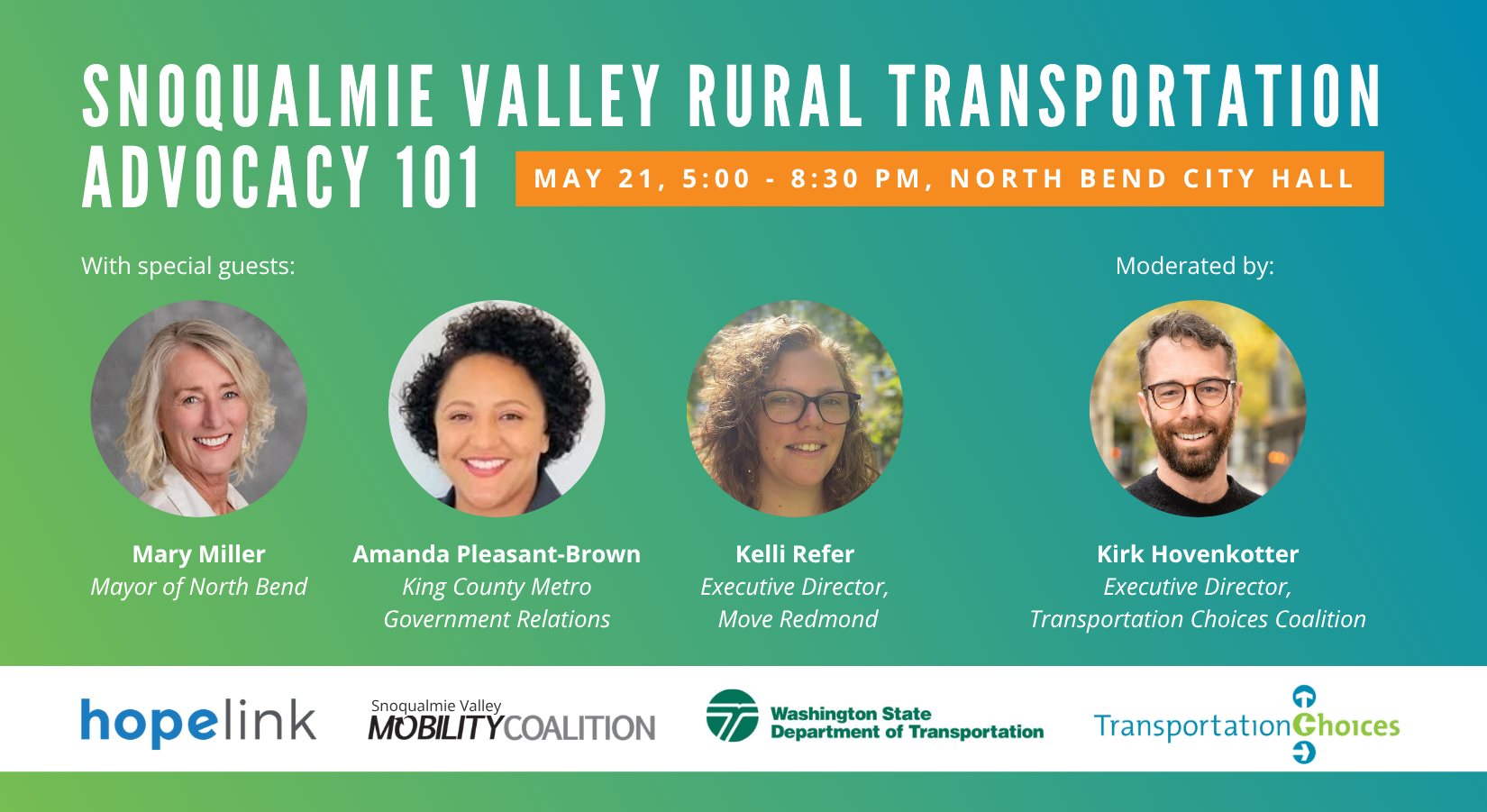
Thursday, May 21st 5:00-8:00pm, North Bend City Hall
With the support of two vendors, Anthro-Tech and Cambridge Systematics, and incorporating feedback from our Mobility Team, various Mobility Coalition Partners and individuals with disabilities, we are excited to bring you an updated version of Find a Ride.
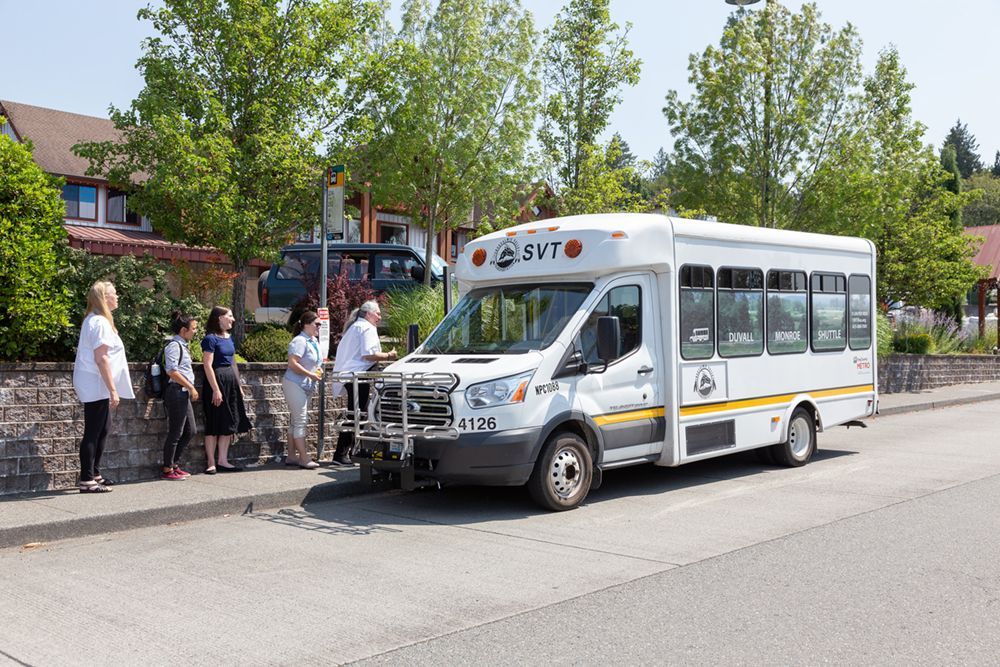
Your Story Matters
Read the full 10-page report here: RARET Flooding 2025 Transportation Report
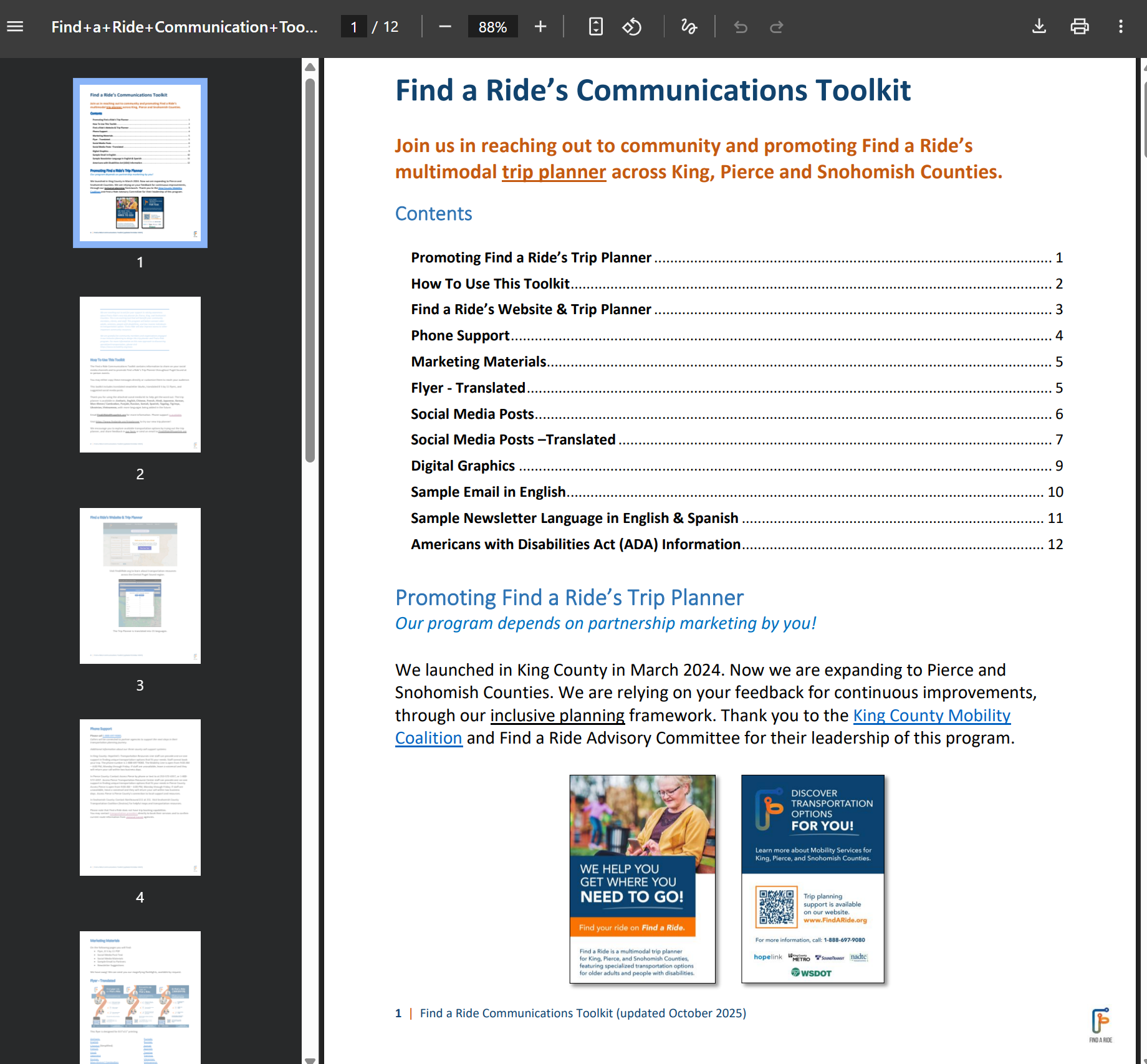
The Find a Ride Communications Toolkit contains information to share on your social media channels and to promote Find a Ride’s Trip Planner throughout Puget Sound at in-person events.
Phase 2 seeks to streamline rules and procedures for rider intake, eligibility determination, and enrollment verification in Puget Sound
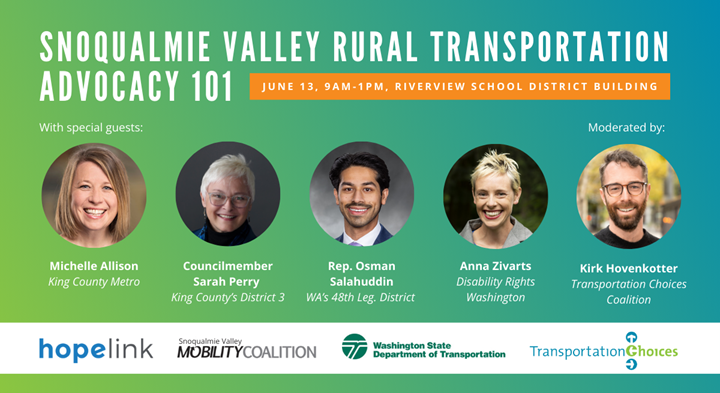
SVMC hosted a Rural Transporation Advocacy 101 Workshop on June 13th, 2025
Downstream Transportation Impacts of Medicaid Cuts & Changes, July 2025